
Last updated November 21, 2026
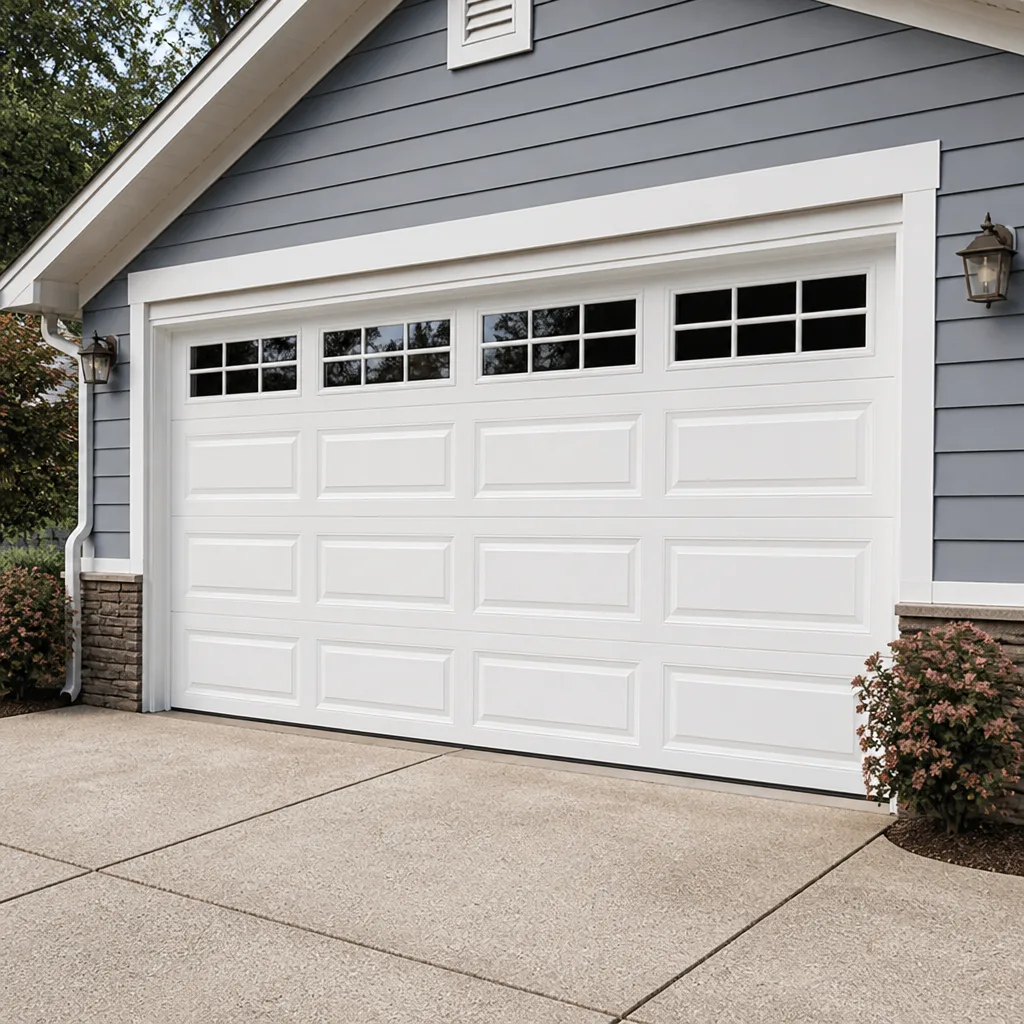 Raised-panel steel
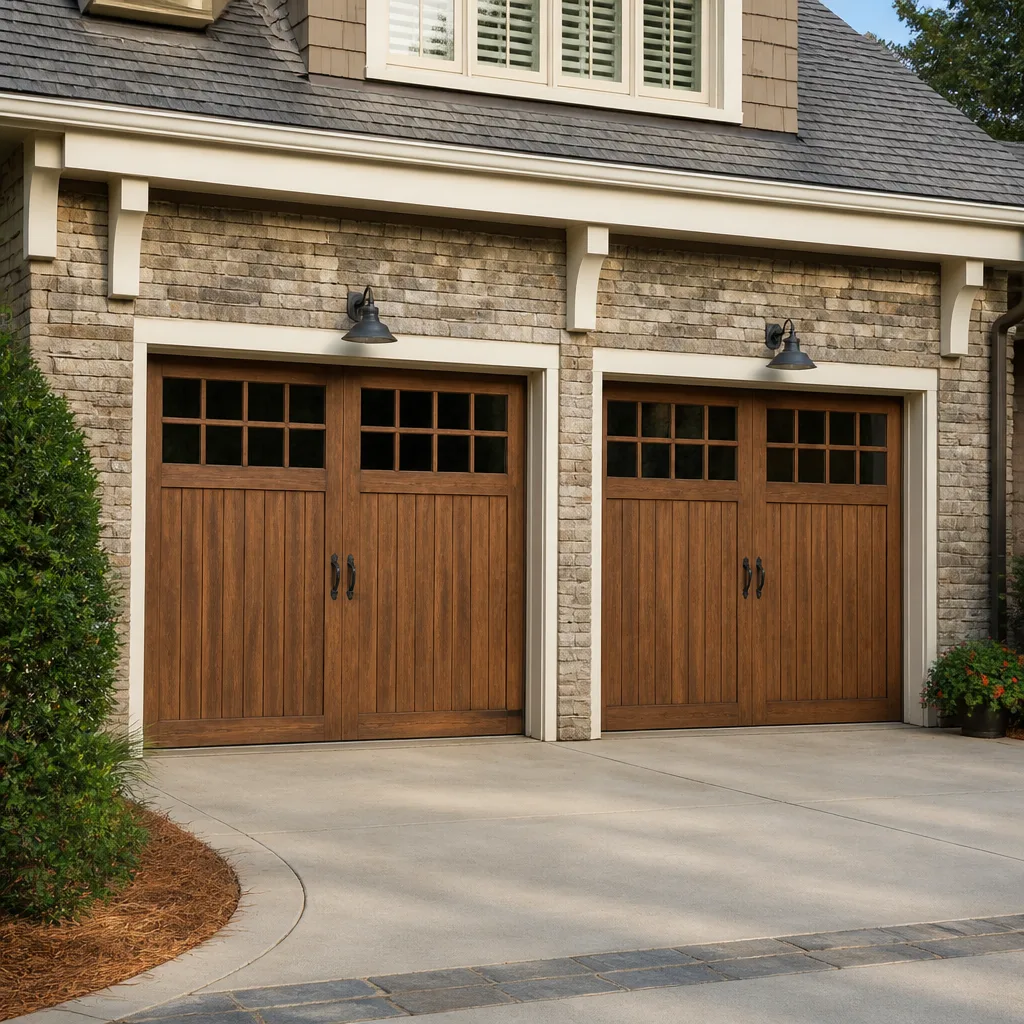 Carriage house
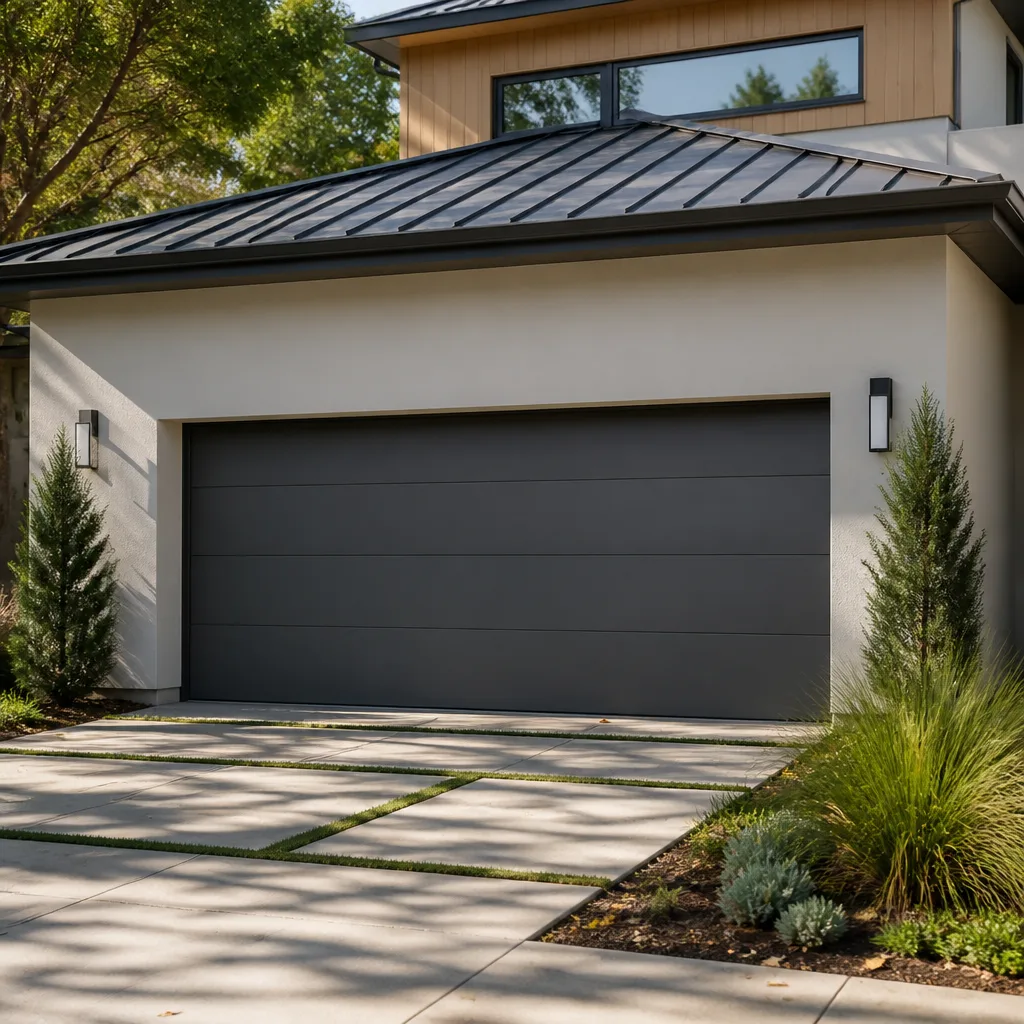 Modern flush
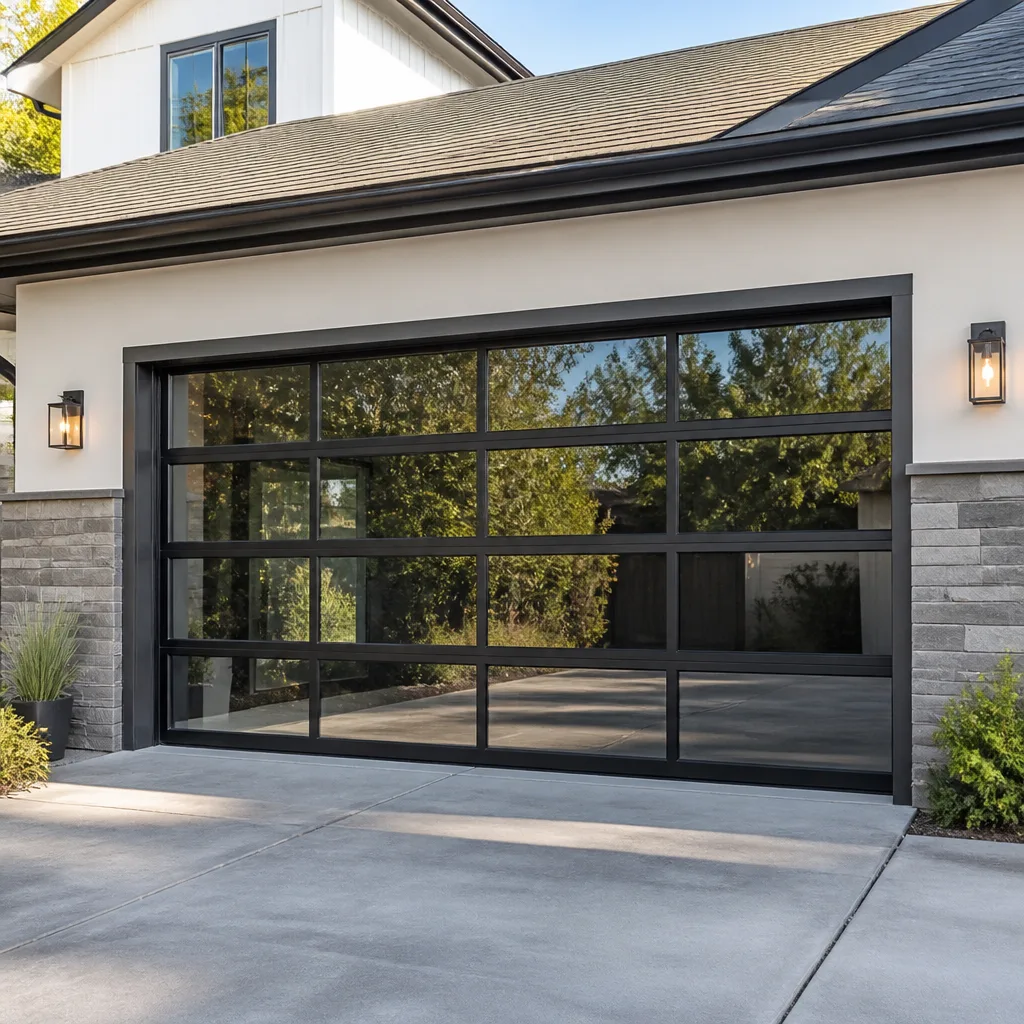 Full-view glass
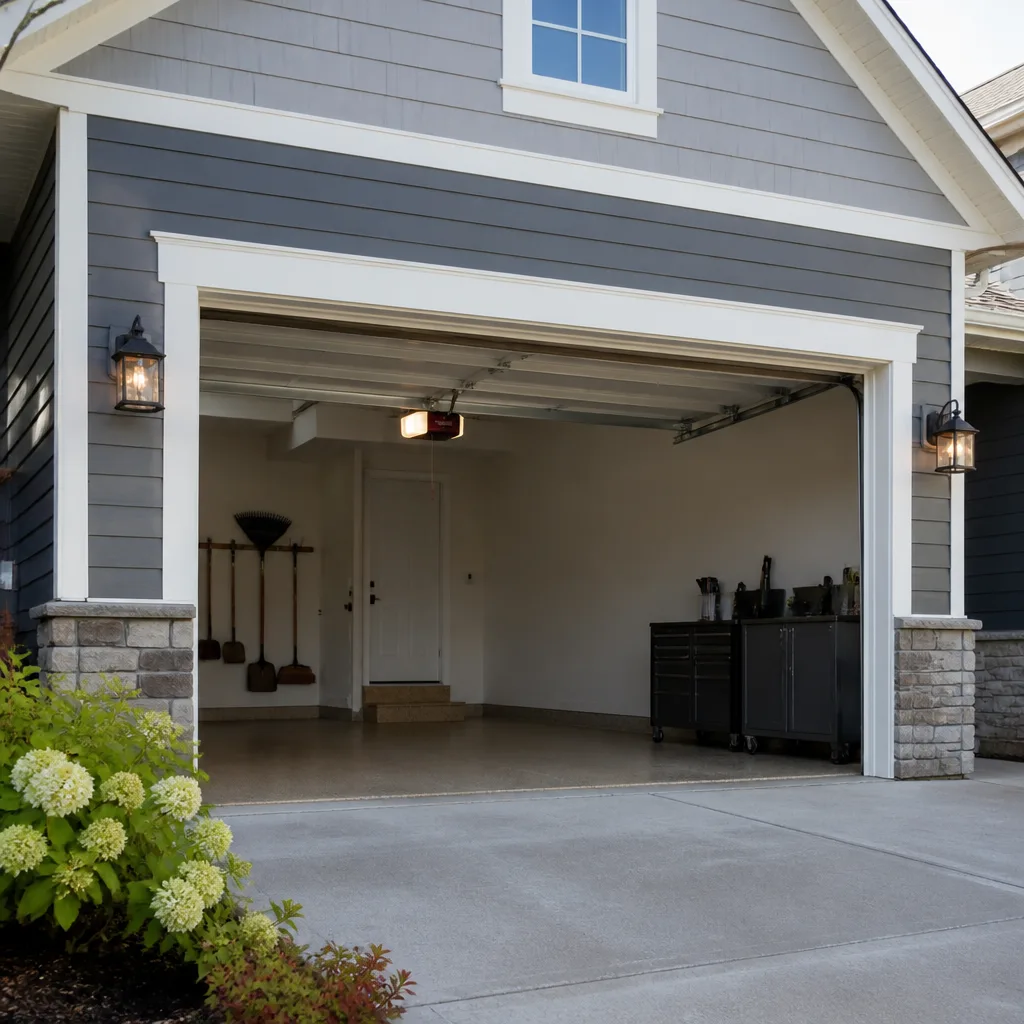 LiftMaster openers
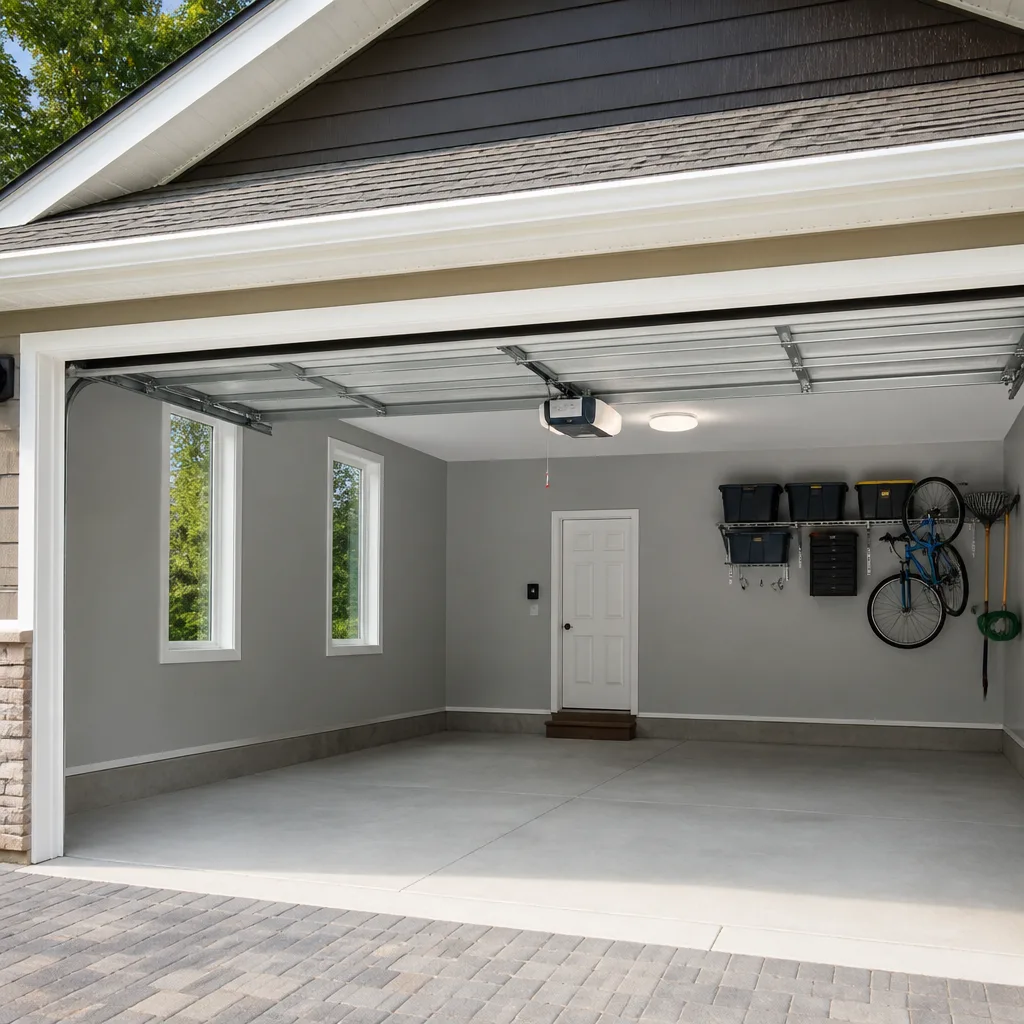 Chamberlain openers
Full 25-point door and opener safety check with every visit - springs, cables, rollers, tracks, and your LiftMaster or Chamberlain opener included
You get a price before we start. It does not change when the pro arrives.
Get your free estimateThe Complete Guide to Garage Doors in Canton
Most garage door advice online is written for a country that doesn’t exist here. It assumes mild winters, steady humidity, and a housing stock built to one national template. Canton doesn’t work that way. With more than 42 inches of precipitation a year and hard freeze cycles that push below 0°F, the hardware on a Canton garage door lives a harder life than the same door in a milder climate. Springs lose tension faster, steel panels swell and pit, and openers labor through temperature swings that test every gear and sensor. This guide covers the full lifecycle of a garage door in Canton – choosing, installing, maintaining, and repairing one – through the lens of Northeast Ohio conditions. By the end you’ll know what actually fails here, why, and when to fix versus replace.
Quick Answer
A garage door in Canton needs three things to last: the right material for freeze-thaw and humidity, brand-specific parts that match your opener and door system, and spring calibration that accounts for Stark County’s temperature swings. Most doors fail early not because of bad hardware but because the wrong parts were used or maintenance was skipped. Repair is usually the right call until a door reaches the point where panels, springs, and opener are all near the end of their life at once – that’s when replacement costs less over time.
Styles & brands we work with
- Raised-panel steel
- Carriage house
- Modern flush
- Full-view glass
- LiftMaster openers
- Chamberlain openers
Table of Contents
- How Canton’s Freeze-Thaw Cycles Affect Torsion Springs
- Door Materials That Hold Up in Canton – and Which Don’t
- Brand Prevalence by Decade of Construction
- Repair vs. Replace: The Lifecycle Timeline
- Canton Permits and Stark County Code Gotchas
- Opener Systems and the Smart-Home Failure Points
- A Seasonal Maintenance Calendar for Northeast Ohio
- How to Choose a Garage Door Contractor in Canton
How Canton’s Freeze-Thaw Cycles Affect Torsion Springs
Torsion springs are the most misunderstood component on any garage door, and in Canton they’re the part that fails most often. A torsion spring stores the energy that counterbalances the door’s weight. It’s a precision-wound steel coil, and like any steel it responds to temperature. When Canton swings from a humid 85°F summer afternoon to a 5°F January morning, that coil contracts and stiffens. The tension calibration that felt correct in October can be measurably off by February.
Here’s the part national guides miss: Stark County’s freeze-thaw pattern isn’t a single cold snap. It’s dozens of cycles through a winter, each one expanding and contracting the spring, the cables, and the door panels themselves. That repeated stress is what causes the fatigue cracks that eventually snap a spring. A door that opens smoothly in a climate with a stable winter will bind and strain under the same use here.
What that means for your door
- Springs age faster. The industry standard cycle rating assumes moderate conditions. In Canton, expect the low end of that range, not the high end.
- Doors get heavier in cold. Cold grease thickens in rollers and hinges, so the opener works harder. If your door strains on a cold morning, the springs may already be weakening.
- Balance matters more. A door that’s slightly out of balance in summer can become genuinely dangerous when cold weather exaggerates the imbalance.
Spring failure is a safety issue, not just a repair call. A torsion spring under tension carries enough stored energy to cause serious injury, which is why we never recommend homeowners adjust or replace one themselves. This is one of the highest-risk jobs in the trade, and it’s a dedicated part of what we do. If a spring has snapped, or your door slams down instead of easing shut, stop using it and treat it as urgent. Our technicians have up to 14 years of experience with torsion systems and can recalibrate or replace a spring safely.
When your spring work is done right the first time, you’re not calling back in six months. Brand-specific knowledge matters here – knowing how a Wayne Dalton torsion system on a 1990s home behaves differently from a modern Clopay setup means the right parts come on the first visit.
Door Materials That Hold Up in Canton – and Which Don’t
The single biggest factor in garage door longevity in Canton isn’t the brand – it’s the material and how well it’s protected against moisture and temperature cycling. Canton’s humidity is meaningful in summer, and road spray from treated streets in winter works its way into seams and hinges. We regularly see the same defects on doors installed by well-meaning owners who bought for looks rather than for this climate.
Steel
Steel is the most common material in Canton homes and the right choice if you buy it at the right gauge. The difference between a 24-gauge and a 27-gauge steel door is enormous over ten winters. Heavier gauge resists denting from incidental impacts and holds its shape through temperature cycling. The failure mode is at the bottom edge: untreated steel rusts first where road spray and snowmelt collect. Look for a door with a factory-applied finish and a bottom seal that keeps moisture off the steel.
Wood composite
Wood composite looks great and insulates well, but in Canton’s humidity it demands attention. The advantage is that it can be sanded and refinished, which extends its life significantly if you keep after it. The disadvantage is that unsealed composite panels absorb moisture at the joints and swell. If you want wood-look, buy composite over solid wood – the maintenance is more predictable.
Aluminum
Aluminum is lightweight and won’t rust, which sounds ideal. The catch is that it dents easily and conducts temperature, so it feels the cold. For a garage door in Canton, aluminum is a reasonable choice for a low-traffic door that won’t take impacts, less so for a busy household.
What degrades fastest here
- Untreated or poorly finished steel – rusts at seams and the bottom rail within a few winters.
- Solid wood without a maintained finish – swells, warps, and cracks through humidity swings.
- Thin-gauge steel – dents and bows, throwing the door out of balance and straining springs.
- Cheap plastic rollers and hinges – crack in cold weather and turn a small repair into a bigger one.
The good news: Canton’s housing stock is full of durable doors that just need the right maintenance. When we look at a door, we’re looking at the gauge, the finish, and the hardware together – not just the panel color.
Brand Prevalence by Decade of Construction
If you bought a home in Canton built between the 1970s and 2000s, you inherited a garage door system from a particular era of the trade, and that history tells you a lot about what’s likely on your door right now. Knowing the decade helps us know what parts to expect and what failure points to watch.
1970s to mid-1980s
This era was dominated by wood doors and early steel doors with simple chain-drive openers. Many Genie and Craftsman openers from this period are still in service, though they lack the safety sensors and reversing features of modern systems. If you’re in a home from this stretch, the door itself has likely been replaced at least once, but the opener may be original. Legacy openers need specialist parts knowledge, which is why we keep repair capability across both old and new systems.
Mid-1980s to 1990s
Wayne Dalton and Clopay doors are common in this era of Canton homes. Steel panels from this period are generally solid, but the springs and rollers are the wear points. The torsion springs on many of these doors are original, which means they’re well past their expected cycle life. If you’re in a 1990s home and haven’t had the springs checked, that’s the first thing to do.
2000s and after
Newer construction brought insulated steel doors and smart openers. LiftMaster and Chamberlain openers with belt drives and Wi-Fi connectivity are common. The doors themselves are usually dependable; the failures here tend to be opener-side – sensor misalignment, gear and logic board problems, and smart-home connectivity issues. This is the fastest-growing segment of service calls, and generalist technicians often struggle with the connected systems.
What to expect regardless of decade
- Original springs past 15 years – treat them as due for replacement, not a surprise failure.
- Opener brand tells you the parts to have – Genie, LiftMaster, Chamberlain, Craftsman, and Raynor each fail differently.
- Doors from every era on Canton blocks – from older homes near downtown to newer construction on the edges, the brand mix is genuinely varied.
If you’re not sure what you have, we can identify the brand and age of your system on the first visit and match the right parts. That’s the whole point of working across eight major brands: your door gets fixed on the visit, not on a return trip.
Repair vs. Replace: The Lifecycle Timeline
The most common question we get about garage doors in Canton is when to stop repairing and replace instead. The honest answer is that it depends on how many major systems are near the end of their life at once. A door is a system: panels, springs, cables, rollers, hinges, and opener all age together. When one or two components fail, repair wins. When four or five are worn, replacement becomes the lower total-cost option.
When repair is clearly the right call
- A single broken spring on an otherwise sound door.
- A failed opener on a door with good panels and hardware.
- A bent or damaged panel that can be replaced individually.
- Noisy or sticking operation that a tune-up can fix.
- Any safety sensor or reversing issue that’s a matter of adjustment or a single part.
When replacement starts to make sense
- The door is 20+ years old and has had multiple repairs in recent years.
- Panels are rusted through at the bottom or bowed out of shape.
- Springs and opener both need replacing at the same time on an aging door.
- The door no longer insulates the garage – you’ll notice this most on cold Canton mornings.
- You want a safer, quieter system with modern safety features.
A general lifecycle timeline
- Years 1-5: Minimal service. Annual tune-ups keep rollers and hinges quiet.
- Years 5-10: Springs may need adjustment; rollers and hinges start to wear.
- Years 10-15: First spring replacement is common. Opener may begin to show strain.
- Years 15-20: Second spring set often needed; opener replacement becomes likely.
- Years 20+: Evaluate total system condition. Repair still works, but replacement planning begins.
If you’re weighing repair against replacement, our garage door repair team can give you a straight assessment on a free estimate. We’d rather tell you a repair is the smarter move than sell you a door you don’t need. And when replacement is the right answer, a proper measure and written quote come before any work – no surprises on the invoice.
Canton Permits and Stark County Code Gotchas
Permits are where a lot of garage door projects go sideways for homeowners who try to coordinate it themselves. The rules vary by municipality and by project scope, so the safe move is always to check with your city’s building department before work starts. The permit requirement isn’t the same for a repair as it is for a full replacement, and Canton’s building department is the only reliable source for what your project needs.
General rules to plan around
- Repairs usually don’t require a permit. Spring, opener, and hardware work is typically considered maintenance.
- Full door replacements often do. Structural changes to the opening, new door dimensions, and header work frequently trigger a permit.
- Electrical work for a new opener can require an electrical permit if new circuits are involved.
- HOA rules can be stricter than code. Before you buy any door, check your neighborhood association’s requirements on color, style, and material.
Common code gotchas
- Safety reverse requirements. Current code expects a door with a functioning automatic reverse and safety sensors. If your door lacks them, an installer will flag it.
- Header and framing. A door that’s a different size than the original opening may need framing work and inspection.
- Egress and clearance. If the garage is attached to living space, fire separation requirements apply to the door and wall assemblies.
- Permit records. Unpermitted past work can surface at sale. When we install, we can walk you through what the building department will expect.
It’s tempting to skip the permit step to save time. Don’t. The building department is the authority on what’s required for your specific address, and a quick call to them early prevents a headache later. Our garage door installation process builds permit checks into the schedule so nothing gets missed.
Opener Systems and the Smart-Home Failure Points
Opener problems are the fastest-growing category of garage door service calls, and they’re also where generalist technicians most often fall short. A modern opener isn’t just a motor and a remote. It’s a control system with safety sensors, travel limits, force settings, and often Wi-Fi connectivity. When something goes wrong, the fix depends on knowing the brand’s specific architecture.
Legacy versus smart systems
Older chain-drive openers from Genie and Craftsman are mechanically simple and straightforward to diagnose. Modern belt-drive systems from LiftMaster and Chamberlain are quieter and smarter, but they add sensor logic and connectivity that complicate troubleshooting. A door that won’t close can be a sensor misalignment, a logic board fault, a travel limit set wrong, or a Wi-Fi module conflict. Each brand handles that diagnosis differently.
The most common opener failures
- Safety sensor misalignment. A cobweb, a bumped bracket, or sun glare can break the beam. Simple to fix once found.
- Stripped drive gear. Common on chain-drive systems after years of use. The motor runs but the door doesn’t move.
- Travel limit drift. The door stops short or reverses partway. Often fixable with recalibration.
- Logic board faults. Erratic behavior, unresponsive remotes, or dead keypads.
- Smart-home connectivity. App pairing, Wi-Fi dropout, and firmware mismatches. The most brand-specific of all.
When you call for garage door opener repair, the most useful thing you can tell us is the brand. We work across LiftMaster, Chamberlain, Genie, and Craftsman, among others, so we arrive knowing the likely failure points before we see the unit. That’s what “same visit, right parts” means in practice. We also know Raynor and Wayne Dalton door systems, and Clopay and Amarr panels, so we cover the full system.
What to check before you call
- Look at the sensors. Are both sensor lights solid? Is anything blocking the beam?
- Check the wall control. Does the door respond to the wall button but not the remote? That points to a remote or receiver issue.
- Listen to the opener. A humming motor that doesn’t move the door usually means a drive gear or capacitor.
- Check the manual release. If the door operates by hand but not with the opener, the problem is the opener, not the door.
If those checks don’t solve it, that’s our cue. Don’t keep cycling a door that won’t cooperate – you can turn a small fix into a larger one.
A Seasonal Maintenance Calendar for Northeast Ohio
Garage door maintenance in Canton looks different from the generic advice you’ll find online. The schedule here has to account for the humidity of summer and the hard freeze of winter. A little attention at the right times of year keeps a door running smoothly and catches small problems before they become expensive ones.
Spring (March-May)
- Inspect springs and cables after the winter’s temperature cycling. Look for gaps, rust, or visible wear.
- Test the auto-reverse. Put a small object in the door’s path and confirm it reverses on contact.
- Lubricate rollers, hinges, and tracks with a garage-door-specific lubricant, not household oil.
- Wash the door panels and patch any small rust spots at the bottom edge before they spread.
Summer (June-August)
- Check the balance. Disconnect the opener and lift the door by hand. It should stay in place about halfway up.
- Inspect weather seals at the bottom and sides. Humidity causes seals to dry out and crack.
- Listen for new noises. Grinding or squealing means a worn part is telling you it’s due.
Fall (September-November)
- Book a tune-up before the first hard freeze. Cold weather magnifies every existing problem.
- Tighten all hardware. The vibration of summer use loosens bolts.
- Check the opener’s force settings so it can handle the heavier door of winter.
Winter (December-February)
- Watch for strain. A door that struggles in cold is a sign the springs or opener need attention.
- Keep the bottom seal clear of snow and ice. Ice pack at the threshold can keep the door from closing fully, a security concern.
- Don’t force a stuck door. If it binds in cold, call us rather than pushing it through.
Most of these checks take a few minutes and prevent the majority of emergency calls we see in Canton. A door that’s maintained on this schedule simply lasts longer.
How to Choose a Garage Door Contractor in Canton
The contractor you choose matters as much as the door or the part. The wrong technician can turn a spring replacement into a repeat call, or an installation into a permit problem. Here’s how to judge whether a Canton garage door company is set up to fix your system correctly the first time.
Questions to ask
- Do you service my brand? A technician who carries parts for your specific door and opener system is far more likely to finish in one visit.
- Is the estimate free and written? You should get a clear, agreed price before any work starts. The written quote is the price.
- Are you experienced with torsion springs? Spring work is a specialized, high-risk service. A generalist is not the right call.
- Can you handle emergencies? A broken door that traps a car or leaves the house unsecured needs real availability, not a next-week appointment.
- Will the local pro be licensed and insured as the state requires? Confirm this before work starts.
What we bring to the table
We’re the multi-brand specialist for Canton garage doors. Our technicians have up to 14 years of experience across LiftMaster, Chamberlain, Genie, Clopay, Amarr, Wayne Dalton, Craftsman, and Raynor systems, from legacy openers to smart connected units. We handle the full lifecycle: repair, spring work, opener repair, and new installation. When a door fails and it becomes urgent, we offer emergency service because we understand a garage door failure is about access and security, not inconvenience. We answer 24/7, and we run fast dispatch from 7am to 7pm. Estimates are free, and the price is set before work begins.
You should also know you’re never dealing with a call center that hands you off. Garage Door Repair Canton Pros connects you with vetted independent local professionals who do the work and carry the parts. That’s how we keep the first visit the only visit.
Common Mistakes to Avoid
- Replacing only one spring on a paired system. Springs on a torsion system are matched and age together. Replacing one leaves the other weaker, and the imbalance strains the whole door. Replace the pair.
- Using household oil on the door hardware. It attracts dirt and gums up in cold weather. Use a garage-door-specific lubricant, and never lubricate the tracks themselves.
- Ignoring a door that’s out of balance. A door that won’t stay halfway up when released is a warning that the springs are failing. It won’t fix itself, and it can get dangerous.
- Buying a new door without checking your HOA. Canton-area neighborhood associations often restrict color, style, and material. Get approval before you order.
- Skipping the permit on a full replacement. Ask your city’s building department what your project needs. A short call early prevents a problem at resale.
- Calling a generalist for a brand-specific opener. Smart and legacy systems from different brands fail in different ways. A technician who knows your brand arrives with the right parts.
- Waiting until the door fails in February. A fall tune-up costs little and catches the problems Canton winters make worse. Schedule it before the first hard freeze.
See the difference
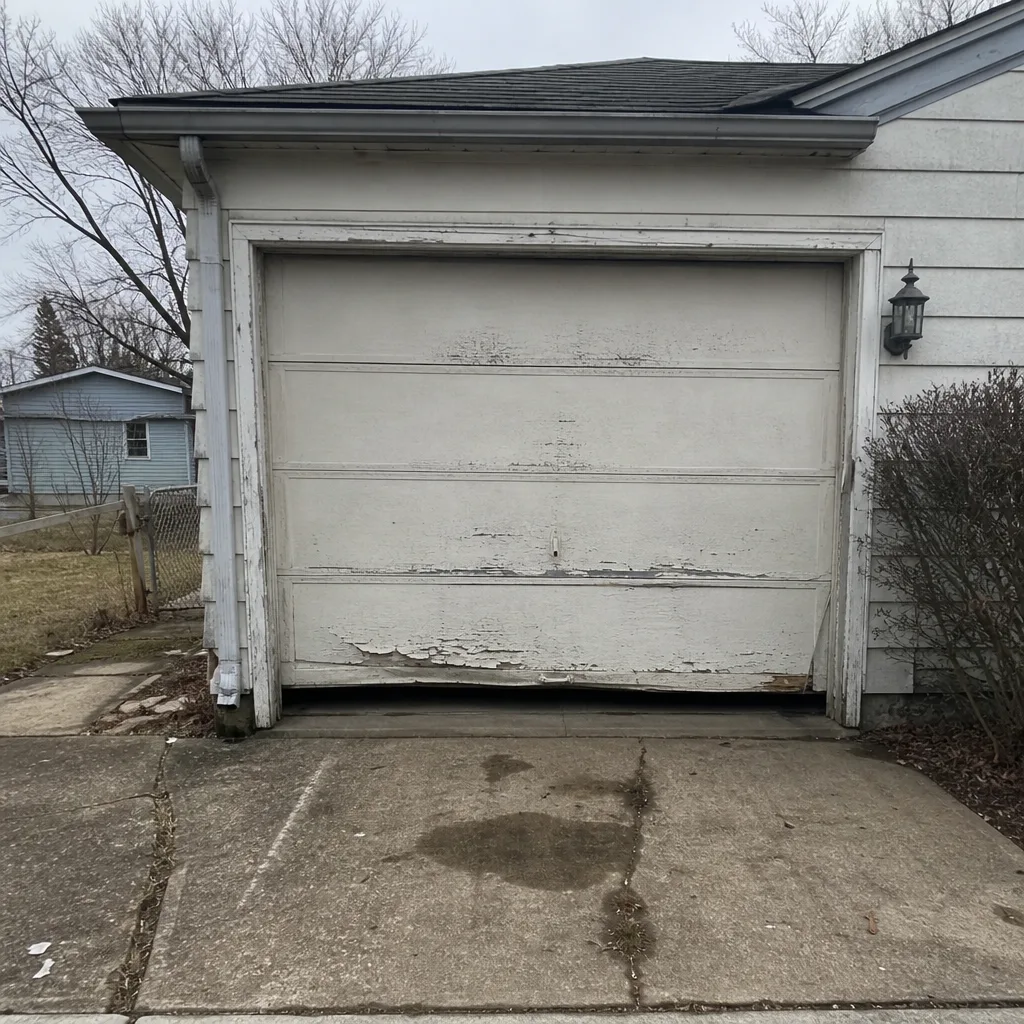 Before
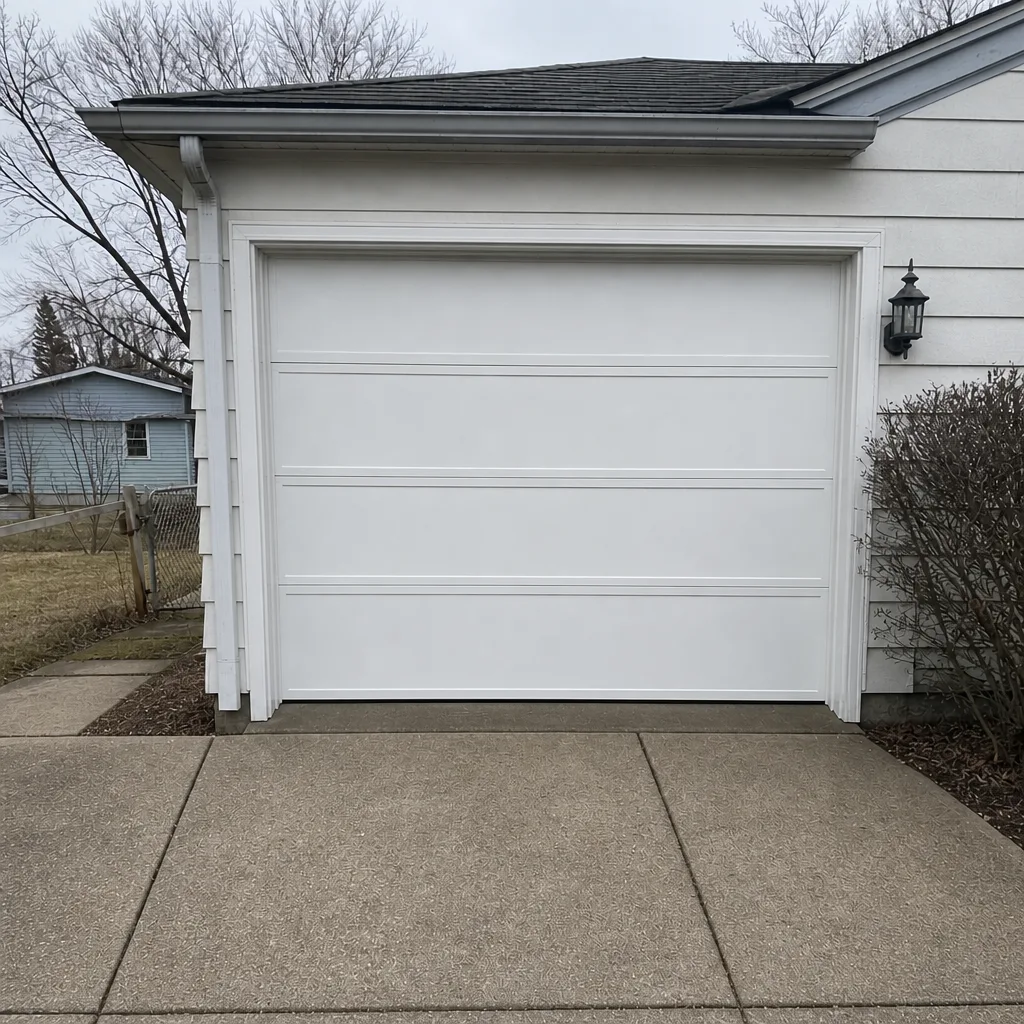 After
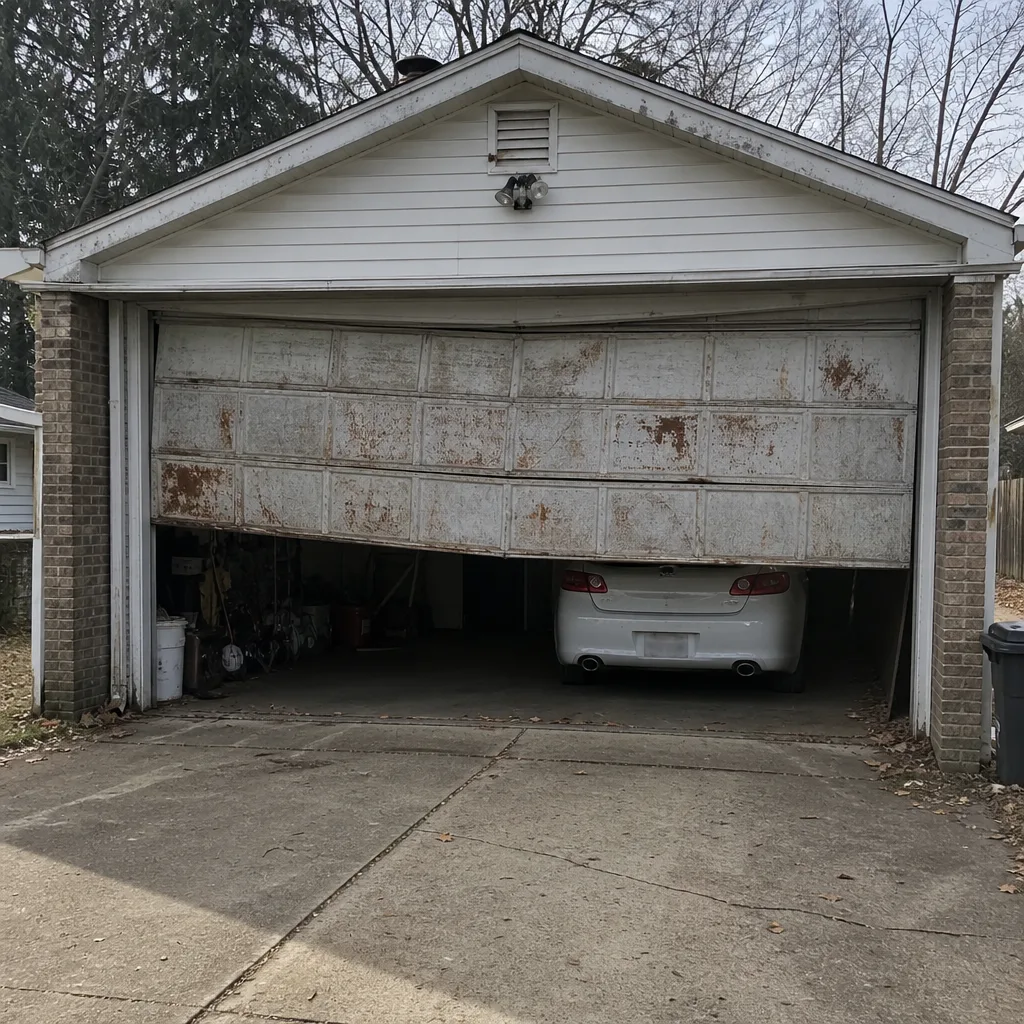 Before
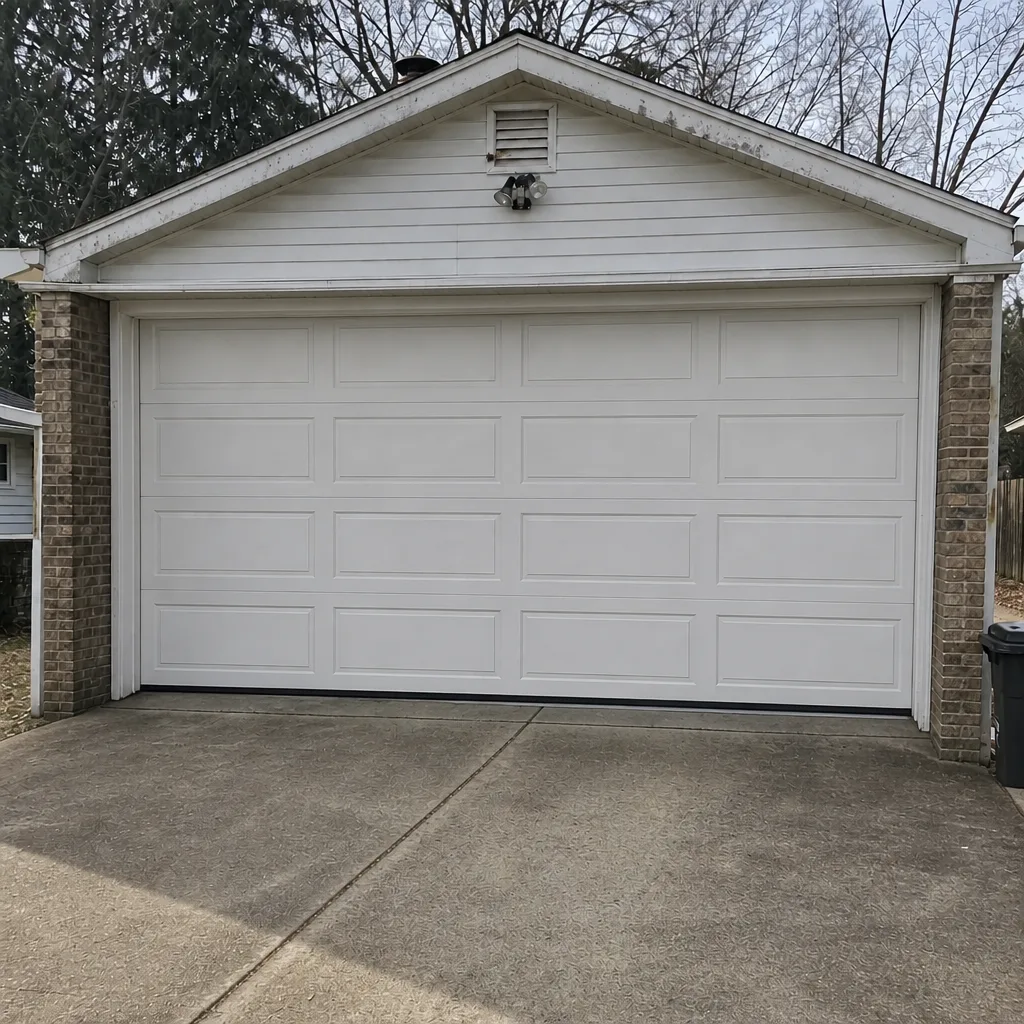 After
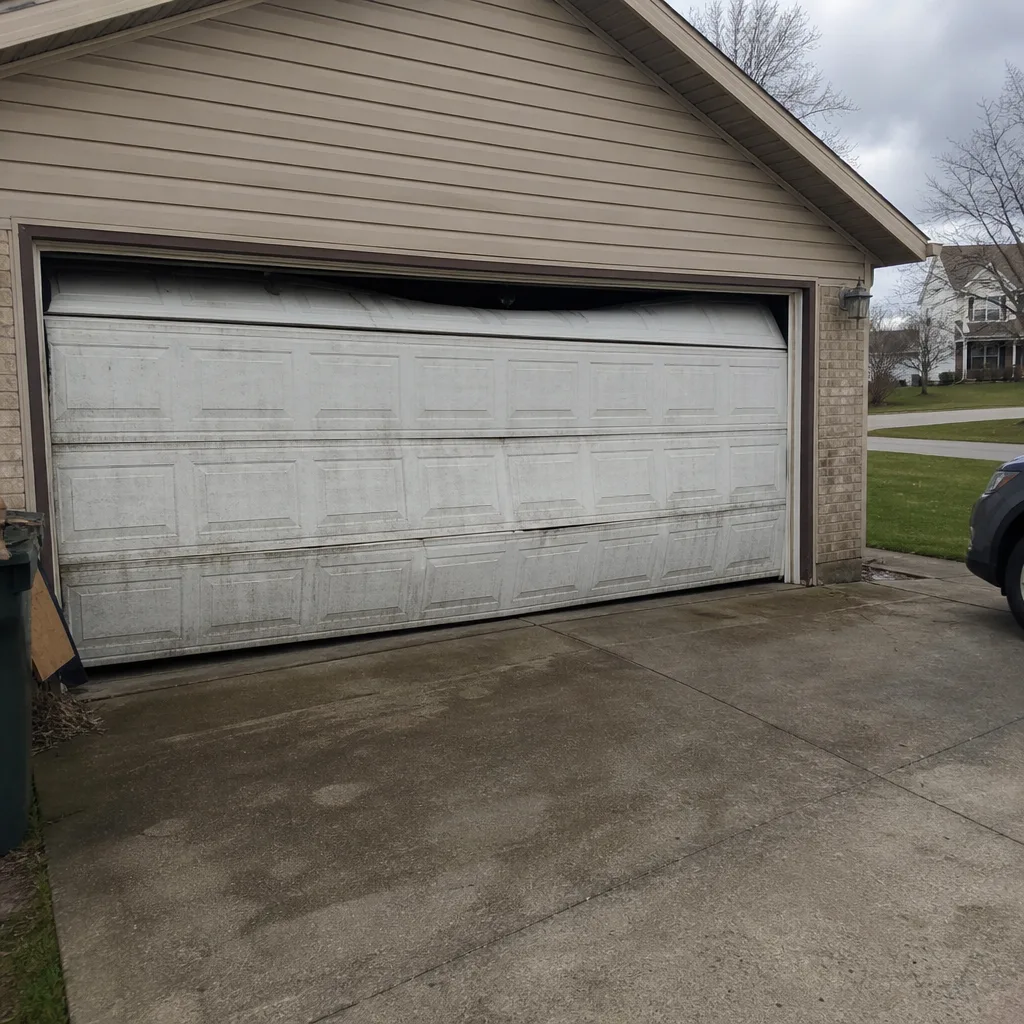 Before
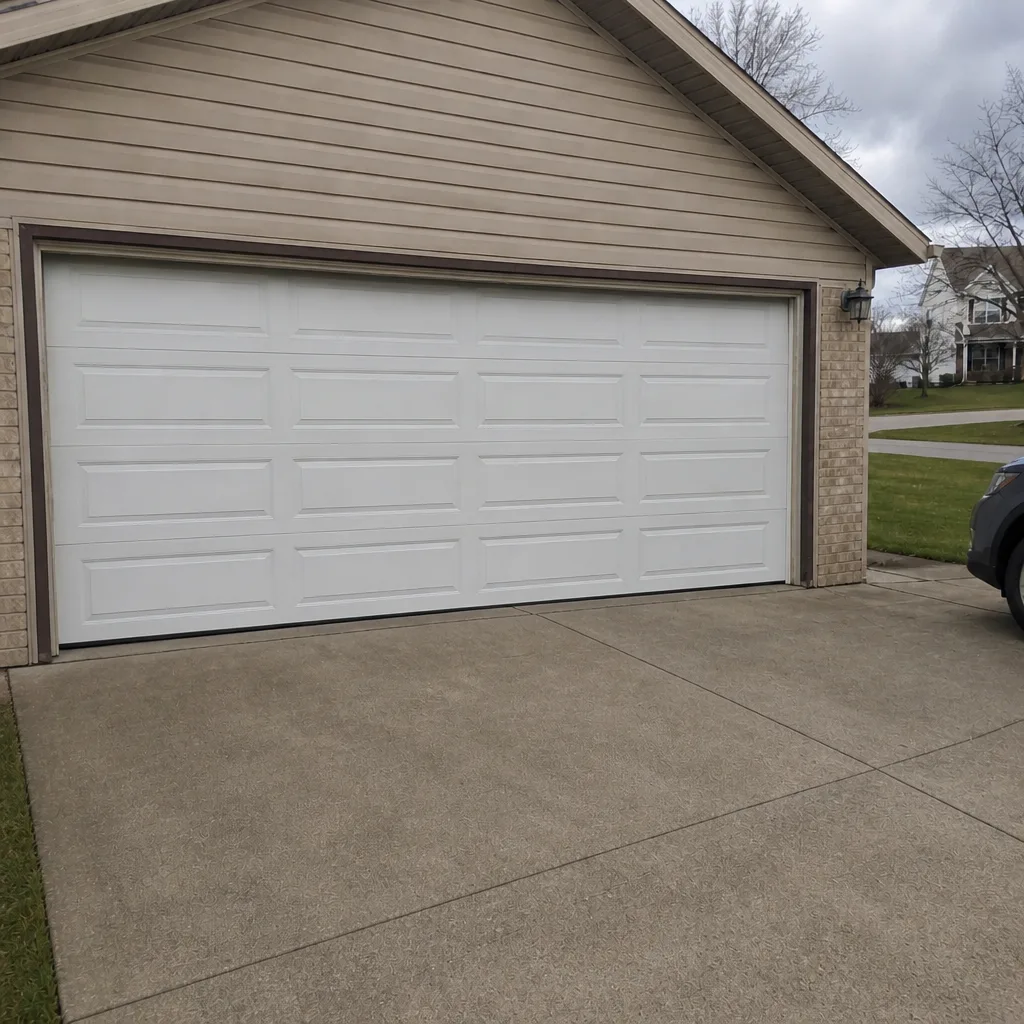 After
When to Call a Professional
Some garage door issues are a matter of adjustment. Others are genuinely dangerous to touch. Call a professional when a torsion spring breaks or a door slams down, when cables are frayed or off the drum, when the door comes off its tracks, when the opener hums without moving the door, or when safety sensors can’t be made to work. Call us also if a door traps a car, leaves the home unsecured, or won’t close fully in the cold. Handle the simple checks yourself – sensors, remotes, weather seals – but leave the springs, cables, and opener internals to a trained technician. Garage Door Repair Canton Pros offers free estimates in Canton – call (855) 707-3791. We answer 24/7, with fast dispatch from 7am to 7pm, Sunday through Friday, and we quote the price before any work starts.
Frequently Asked Questions
Spring repair on a single torsion spring typically runs around $180 to $340, and a matched pair – which is usually replaced together – costs roughly twice that. Canton’s freeze-thaw cycles shorten spring life, so many doors here need the pair replaced together. The written estimate sets the final price. Call (855) 707-3791 for an exact quote – estimates are free.
Yes, we offer same-day repair for many garage door problems, and emergency service when a door traps a car or leaves your home unsecured. We answer 24/7. A call outside dispatch hours is booked into the next opening, Sunday through Friday, 7am to 7pm. Call (855) 707-3791 and we’ll get you on the schedule.
No. The written estimate you agree to is the price you pay. We quote before work starts and stick to it. If we discover something that changes the job, we’ll talk it through with you before doing any additional work – there are no surprise invoices. Call (855) 707-3791 for a free estimate.
The independent local professionals we connect you with are licensed and insured as the state requires, and our technicians have up to 14 years of experience. We work across LiftMaster, Chamberlain, Genie, Clopay, Amarr, Wayne Dalton, Craftsman, and Raynor systems. Call (855) 707-3791 to book a free estimate.
Possibly, depending on the scope of the project and where you live in the Canton area. Repairs typically don’t need a permit, but full replacements and structural changes often do. The only reliable answer comes from your city’s building department, so call them before work begins. Our installers can walk you through what to expect.
Springs here tend to wear faster than in milder climates because of repeated freeze-thaw cycling. A spring that would last longer in a stable climate reaches the low end of its cycle life in Stark County. If your door is more than 15 years old and the springs are original, have them inspected. Call (855) 707-3791 for a free evaluation – it’s cheaper than a spring failure.
The Bottom Line
Owning a garage door in Canton means owning a system that faces harder conditions than most national advice assumes. Freeze-thaw cycling wears springs, humidity and road spray attack steel, and the brand mix in Canton’s housing stock means the right parts matter more than the lowest price. Repair is usually the right call until multiple major components are near the end at once; then replacement makes more financial sense. Keep a seasonal maintenance routine, check with your city’s building department before a full replacement, and call a brand-specific professional for springs, cables, opener internals, and anything that leaves the door unsafe. We handle all of it across eight major brands, from a single spring to a full new door. Call (855) 707-3791 for a free estimate. We answer 24/7, and fast dispatch runs 7am to 7pm, Sunday through Friday.
Written by the team at Garage Door Repair Canton Pros.