
Last updated November 21, 2026
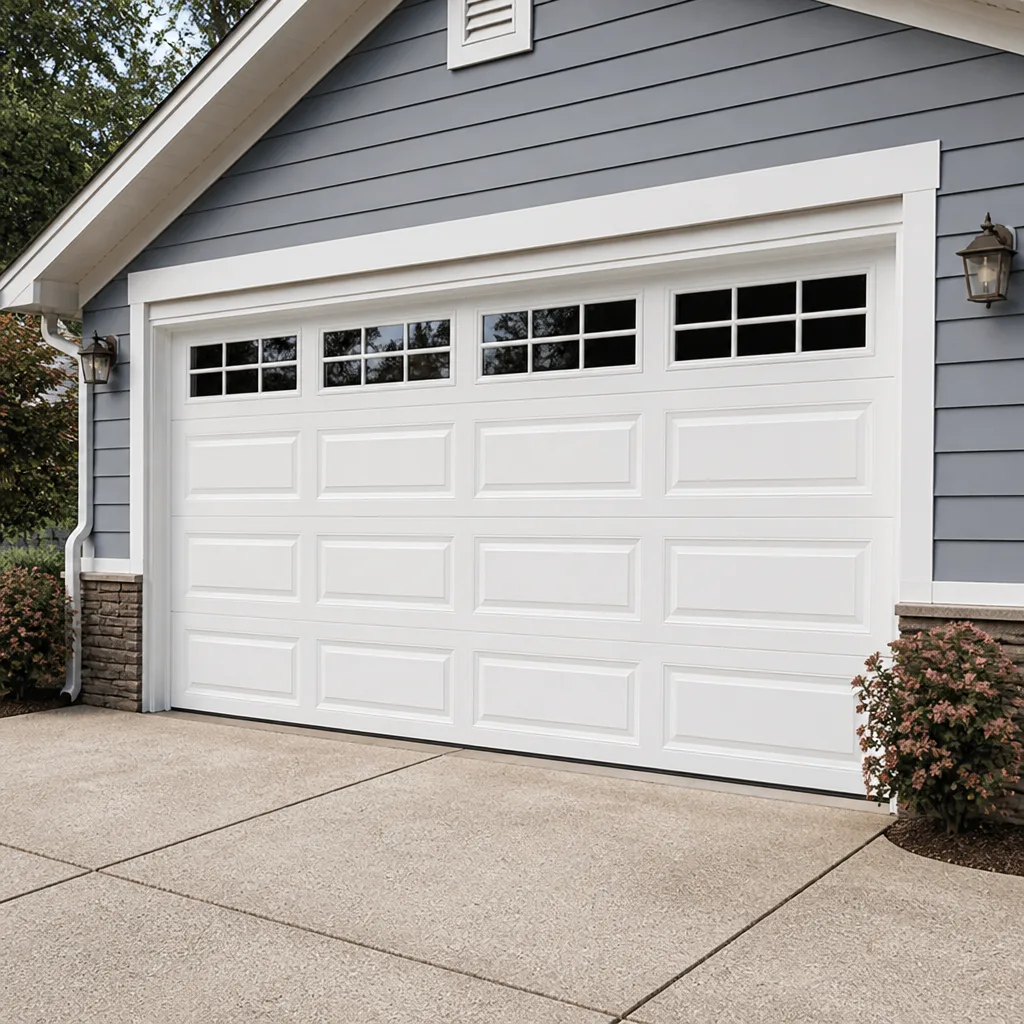 Raised-panel steel
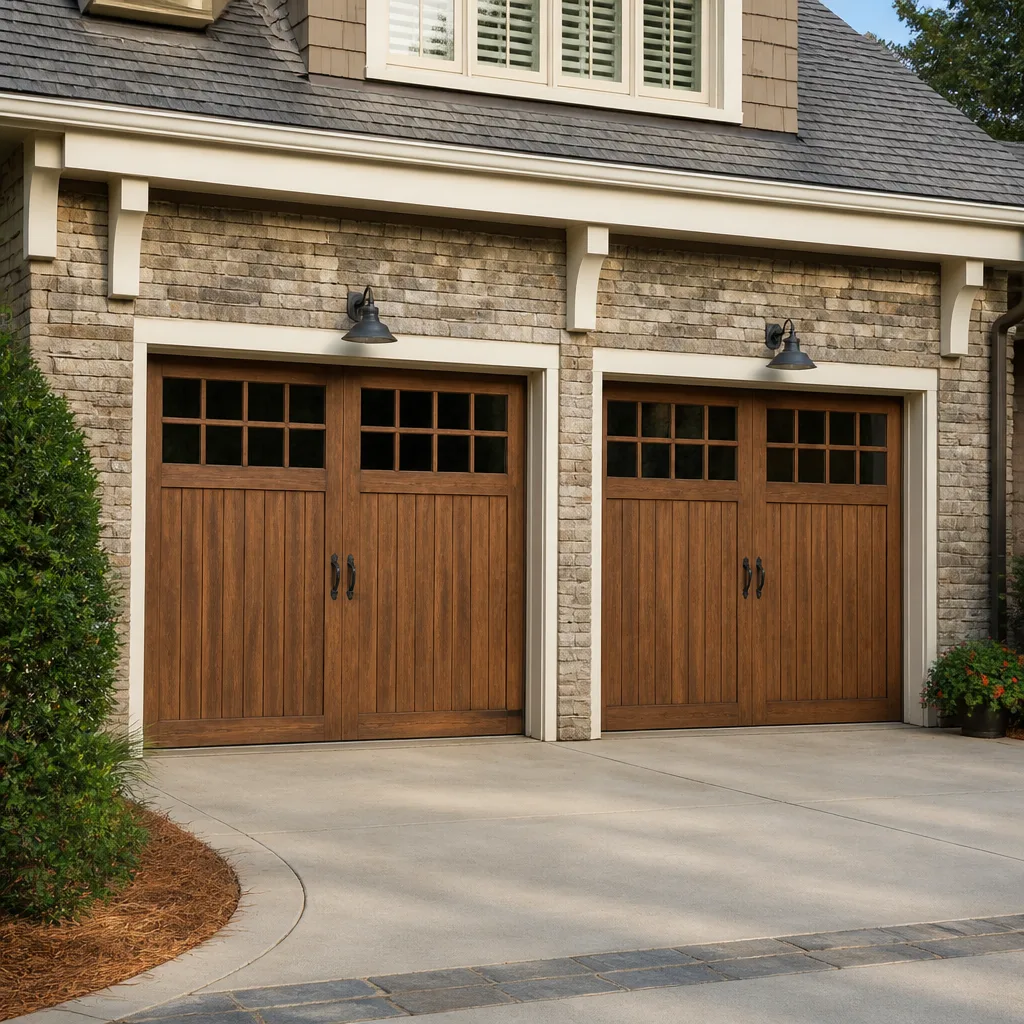 Carriage house
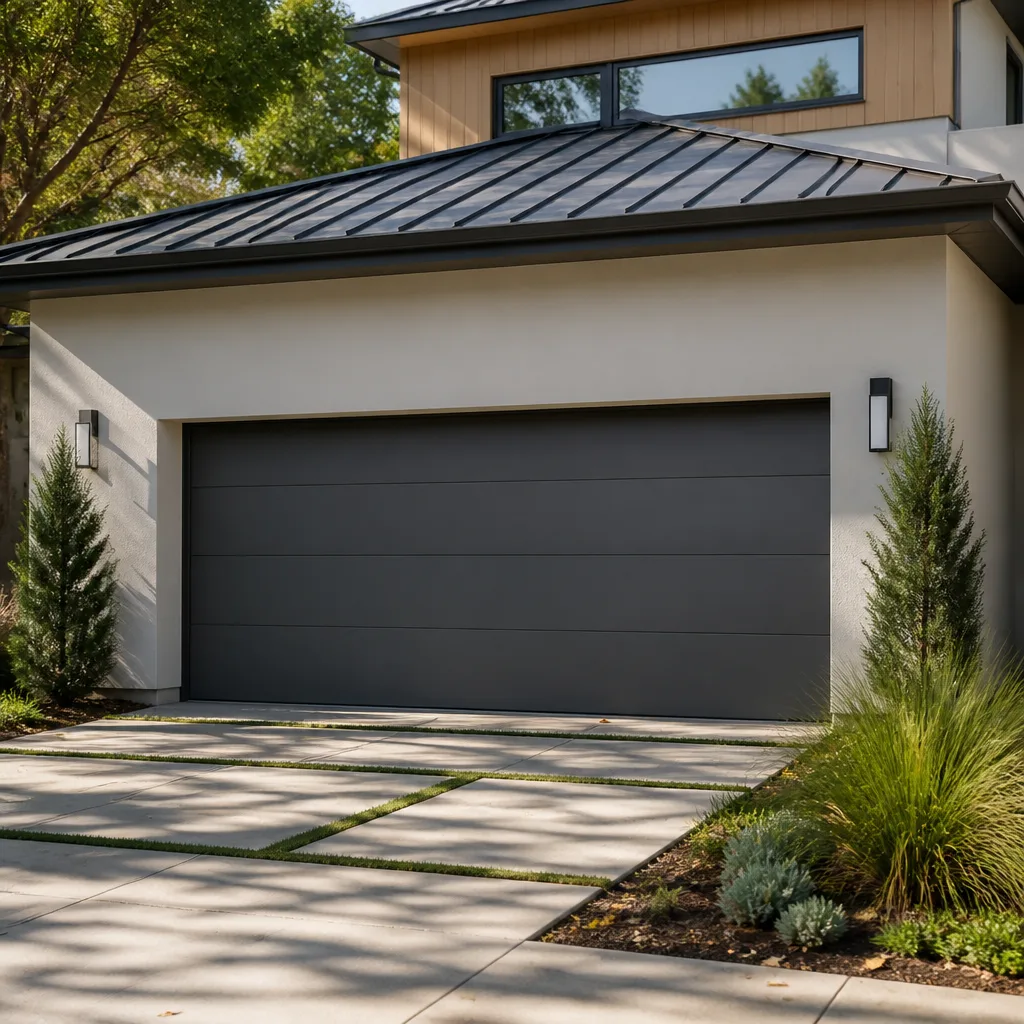 Modern flush
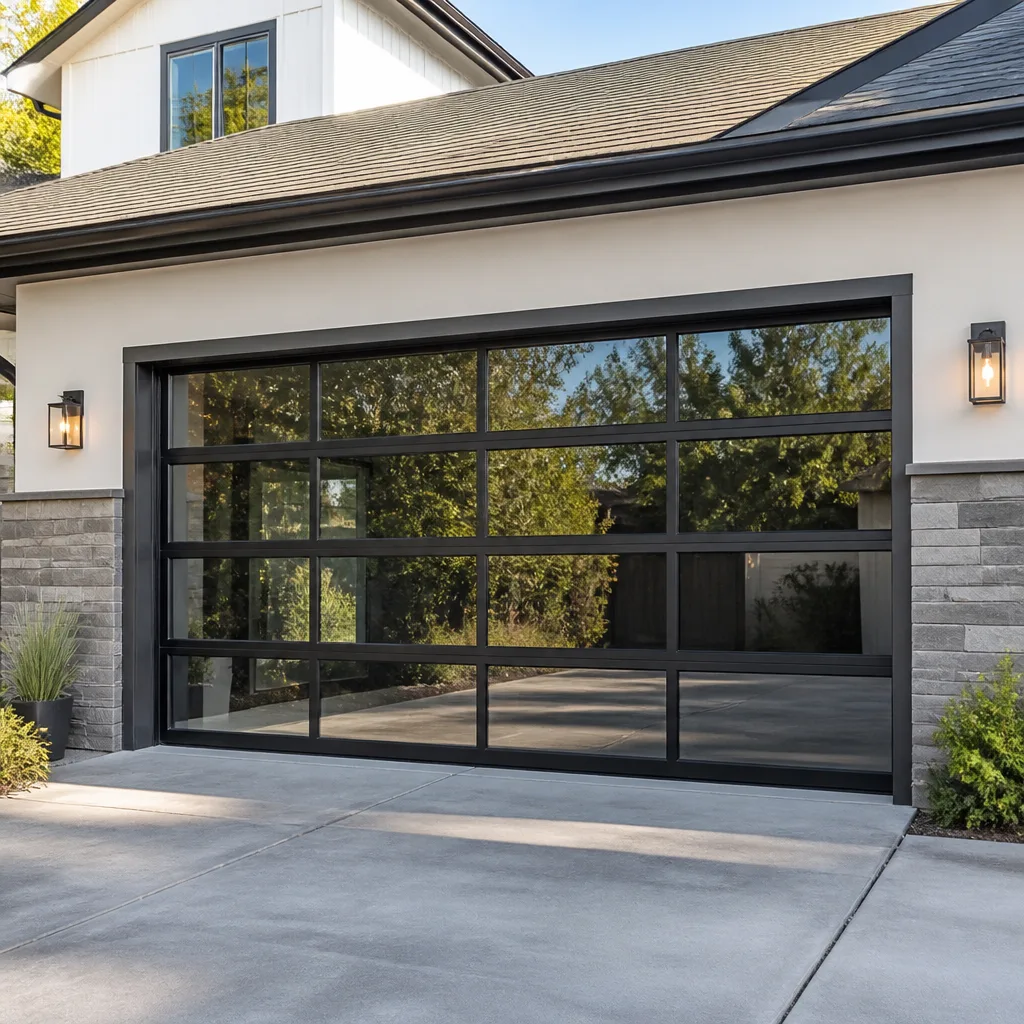 Full-view glass
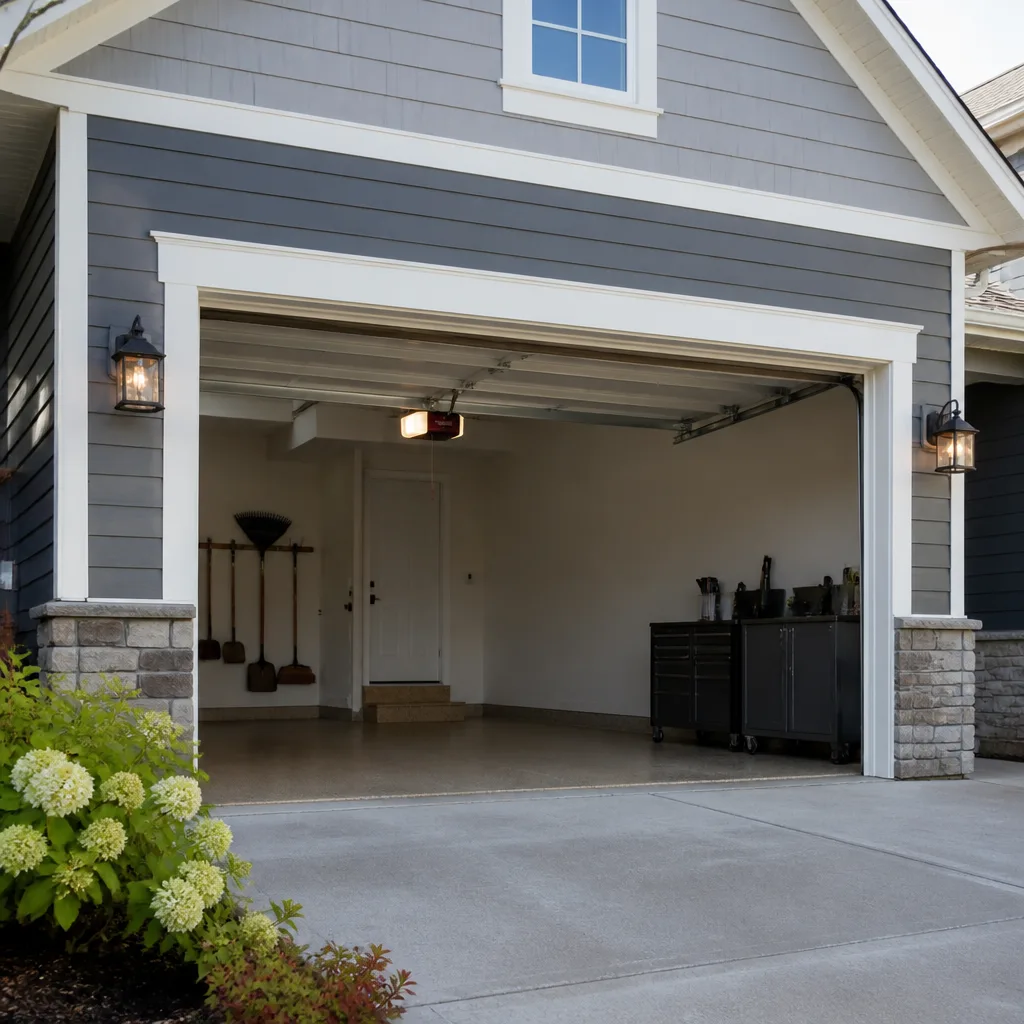 LiftMaster openers
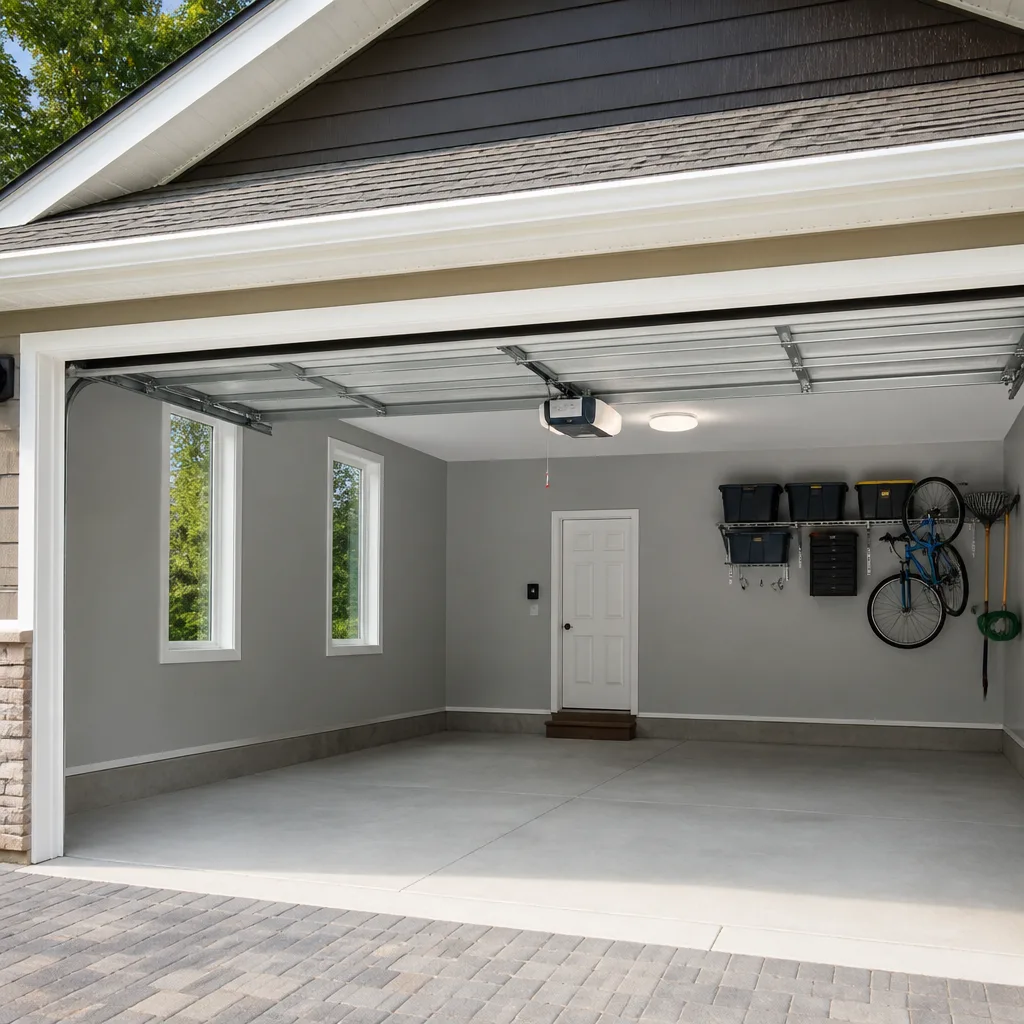 Chamberlain openers
Full 25-point door and opener safety check with every visit - springs, cables, rollers, tracks, and your LiftMaster or Chamberlain opener included
You get a price before we start. It does not change when the pro arrives.
Get your free estimateGarage Door Warning Signs: A Canton Homeowner’s Reference Guide
The things that go wrong with a garage door rarely announce themselves. By the time a door simply won’t open, the part that failed has usually been complaining for weeks. What most Canton homeowners dismiss as a quirk – a half-second hesitation, a slightly louder groan in January, a remote that needs to be closer than it used to – is often the first stage of a mechanical problem that will end in a breakdown. This reference maps those early signals to the component causing them, so you can tell the difference between normal and “get this looked at.” It’s written for people who’d rather schedule a repair than discover a snapped spring on a cold morning with the car trapped inside.
Quick Answer
The most reliable early warning signs of garage door trouble in Canton are a door that hesitates before moving, grinding or squealing during travel, a door that reverses before it reaches the floor, uneven travel or a door that stops at different heights, and visible rust or fraying on springs and cables. Any of these points to a specific worn component – usually a losing torsion spring, a dry or failing bearing, or a misaligned safety sensor. Sounds and travel problems that appear suddenly warrant same-day service; cosmetic wear and small noises can usually wait for a scheduled repair.
Styles & brands we work with
- Raised-panel steel
- Carriage house
- Modern flush
- Full-view glass
- LiftMaster openers
- Chamberlain openers
Table of Contents
- The Symptom-to-Cause Index: What Each Sound Is Telling You
- Visual Early-Warning Markers Most Homeowners Miss
- Operational Anomalies That Aren’t Obvious Failures
- Same-Day Service vs. Scheduled Repair: A Decision Guide
- Canton’s Seasonal Triggers: January Springs and April Slack
- Why Brand Matters When a Symptom Appears
- What You Can Check Safely (and What You Shouldn’t Touch)
- The Maintenance Habits That Delay Failure
The Symptom-to-Cause Index: What Each Sound Is Telling You
A garage door has only a handful of moving parts, and each one fails with a characteristic noise. If you can name the sound, you can narrow the cause before anyone touches the door. Here’s how we map what we hear on a Canton service call to the component most likely producing it.
- Grinding, low and steady, from the center of the door: Usually a torsion spring that’s lost tension and is dragging against its shaft, or a dry bearing plate. Grinding that gets louder as the door rises points to spring or bearing trouble.
- Squealing or a high-pitched squeak during travel: Almost always a dry or worn roller, hinge, or track. This one is often fixable with proper lubrication or roller replacement before it becomes anything serious.
- A sharp popping sound when the door starts to move: A torsion spring that has partially wound or is about to break. Treat this as an urgent signal – a popping torsion spring is a spring that’s failing.
- Clicking from the opener unit itself, not the door: A stripped opener gear or a failing logic board. This is one of the most common opener failures we see, and on a Craftsman or LiftMaster unit it’s often a repair rather than a replacement.
- Rattling that appears only in motion: Loose hinges, a loose panel bolt, or a roller that has slipped out of its track bracket. Easy to catch early, annoying to ignore.
- Humming with no movement: The opener motor is running but the drive isn’t engaging – a stripped gear, a broken drive belt, or a disconnected trolley. Don’t keep pressing the remote hoping it catches; that wears the gear further.
One note on all of this: the spring, shaft, and cable assembly is under extreme tension even when the door is closed. A popping or grinding spring is a stop-what-you’re-doing signal. Don’t reach into the mechanism, and don’t try to “help” the door up by hand while the opener runs. This is exactly the territory a trained technician handles, which is why we treat garage door repair as a job that starts with diagnosis, not guesswork.
Visual Early-Warning Markers Most Homeowners Miss
The door tells you a lot before it makes a sound. A visual once-over from ground level, with your eyes only, catches most of it – if you know what you’re looking at. Here’s what a healthy door looks like, and what the early warning version looks like instead.
A cable starting to fray looks different from a cable about to snap. Early fraying shows as a few stray strands lifting off the main bundle, usually near a drum at the bottom corner or the top of the track. A cable about to fail shows a kinked section, a birdnest of separated strands, or a visible gap where strands have already broken. The first is a schedule-it-now job. The second is a don’t-run-the-door job.
Early rust on springs starts as a light orange speckling near the ends where the spring meets the winding cone, or along the coil where it’s been stretched. That’s different from the brown, flaking scaling that means a spring is older than it should be. In Canton’s swings between damp winters and humid summers, we see surface rust develop faster on doors that face the prevailing weather, so a spring that rusts early is often a sign of moisture exposure, not a manufacturing flaw.
Panel and seal markers matter too. Cracks along the bottom seal, daylight showing under a closed door, or a gap at one corner points to a warped panel or a shifted track floor plate. Small panel delamination along the edges can signal water getting behind the panel skin, which is a repair that’s far cheaper before the panel cracks through.
- Frayed strands lifting from a cable = schedule repair within the week.
- Kinked or broken strands, or a slack cable hanging off its drum = stop using the door.
- Speckled rust near spring ends = inspection on the next service.
- Flaking rust across the coil, or a visible gap in the coil = replace the spring.
- Daylight under the closed door or a cracked bottom seal = seal or panel check.
None of these require a tool in your hand. They require a flashlight and two minutes, once a season. That’s the cheapest diagnostic you’ll ever run.
Operational Anomalies That Aren’t Obvious Failures
The door doesn’t have to stop working to be telling you something. These are the “huh, that’s weird” behaviors that fall short of a breakdown but reliably point to a component on its way out. In our experience, this is the category Canton homeowners wait longest to mention – and it’s where a small repair heads off a big one.
- The door reverses before it reaches the floor. Sometimes it’s a safety sensor knocked out of alignment, sometimes a travel limit that’s drifted. If it’s intermittent – fine for a week, then it reverses again – suspect the sensor wiring or the logic board, not just the sensor itself. This is a safety function, and a door that won’t close reliably leaves the house unsecured.
- The door stops at different heights on different days. Inconsistent stopping usually means a travel limit adjustment is drifting, often because the opener gear or the limit switch is wearing. On a LiftMaster or Chamberlain opener this is a quick diagnostic; on an older unit it may signal the end of the mechanism’s life.
- The remote needs to be closer than it used to. Range degradation is one of the quietest signals. It can be a failing remote battery, but when a new battery doesn’t fix it, the problem is usually in the opener’s receiver logic or the safety sensors. A Genie or Craftsman unit with a worn receiver doesn’t fail all at once – it just gets fussier.
- The door is noticeably louder than it was six months ago. Gradual noise increase is the classic worn-roller or dry-hinge signal. It’s the easiest anomaly to fix and the one people notice last, because there’s no single moment where it “got loud.”
- The door starts with a two-second hesitation. A brief pause before movement is often the earliest visible sign of a torsion spring losing tension. The door has to work harder to get moving, so the opener pushes through the first inch slower than it should.
Each of these is a repair call, not an emergency. But each one has a point where it becomes something bigger, and the pattern of intermittent-then-constant is how you know it’s getting there. If your opener is the part acting strange, the right first step is a proper look at that system: garage door opener repair covers the brand-specific diagnostics that a generalist will miss.
Same-Day Service vs. Scheduled Repair: A Decision Guide
The question isn’t “is this broken?” – it’s “can this wait?” Here’s the line we draw, based on what’s actually dangerous or unusable versus what’s merely worn.
Call for same-day service when:
- The door won’t open or won’t close at all.
- A spring is visibly broken, or you heard a loud snap from the center of the door.
- A cable is kinked, slack, or hanging off its drum.
- The door reverses unpredictably and leaves the house open.
- A panel is hanging or the door is off its track, especially after an impact.
- You’re locked out or the car is trapped and you need to be somewhere.
Schedule a repair within two weeks when:
- The door is louder than it used to be but still travels smoothly.
- One roller is squeaking, or a hinge is dry.
- Rust is speckled but not flaking, and the spring is intact.
- The remote range has dropped but the wall button still works.
- The bottom seal is cracked but the door closes fully.
- You notice the two-second hesitation on a door that otherwise works.
The hesitation case deserves its own mention. It’s the one symptom in this guide that’s most often “wait and see” and most often ends in a snap within a season or two. A torsion spring that’s lost its tension is a spring that’s living on borrowed time. Scheduling it while the door still works is always the calmer option than calling when it doesn’t. If the door won’t move when you call, we offer emergency garage door service precisely because a stuck door is a security and access problem, not a convenience one. Call (855) 707-3791. We answer 24/7. Fast dispatch from 7am to 7pm, Sunday through Friday.
Canton’s Seasonal Triggers: January Springs and April Slack
Garage door failures cluster around the calendar here. If you understand which season stresses which component, you can check the right thing at the right time instead of waiting for a surprise.
January – cold springs and stiff grease. Torsion springs are steel, and steel gets brittle as temperatures drop. A spring that’s already lost tension is most likely to break on the first genuinely cold run of the year, often after the door has sat for a day. The opener’s grease and the door’s hinges also thicken in the cold, which raises the load on the whole mechanism. The early sign is a door that hesitates or sounds harsher on the first cold morning than it did a week before. Our advice in Canton: if you heard popping or grinding in late fall, don’t wait for the January cold to finish the job.
April – post-thaw cable slack and track alignment. After the freeze-thaw cycle ends, cables that were tight all winter can develop slack or a slight sag, and the ground shifting under the door can throw a track subtly out of plumb. This is the month when a door that worked fine all winter suddenly rubs or binds. Look for a cable that hangs looser than the other side, or a track you can see is no longer parallel to the door edge. Tightening or re-aligning a cable is absolutely not a homeowner job – the tension is dangerous – but spotting the slack early is.
Year-round: humid summer stretches put rust on springs and hinges faster than dry months do, and the wet season can drive moisture into panel edges. A spring that rusts quickly in Canton’s climate is a candidate for replacement sooner than its age would suggest.
The pattern across all three is the same: the season doesn’t create the problem, it exposes the weakness that was already there. The homeowner who checks springs before winter and cables after the thaw catches both a season early. If you’re not sure what you’re looking at, a professional inspection is the honest answer.
Why Brand Matters When a Symptom Appears
The same symptom can mean different things depending on what’s on your ceiling and hinges. A grinding noise on a Raynor door isn’t necessarily the same cause as a grinding noise on a Clopay or Amarr system, because the hardware and spring configuration differ. When a symptom points to the opener rather than the door, brand matters even more – opener logic boards, safety-sensor protocols, and drive mechanisms vary across LiftMaster, Chamberlain, Genie, and Craftsman, and that’s where a generalist handyman often runs into trouble.
It helps to know what you have before you call. Check the opener housing for the brand name and model, and note whether the door is steel, wood, or a composite panel. That single step saves a return trip.
- A Craftsman opener that clicks but won’t move usually needs a gear-and-drive repair, not a new opener.
- A LiftMaster or Chamberlain unit with degrading remote range often has a receiver or logic issue, not a battery problem.
- A Genie system that reverses inconsistently may need a travel-limit or sensor-wiring diagnostic that requires the right parts on hand.
- A Raynor, Clopay, or Amarr door with a noise from the hinge or track side usually needs brand-matched rollers and hardware rather than a generic substitute.
We work on all eight of the major residential brands – LiftMaster, Chamberlain, Genie, Clopay, Amarr, Wayne Dalton, Craftsman, and Raynor – for exactly this reason. The right diagnosis depends on knowing each system’s failure points, not just knowing how to turn a wrench. If you’d like to skip the diagnostic back-and-forth entirely, Garage Door Repair Canton Pros is the place to start: same visit, right parts.
What You Can Check Safely (and What You Shouldn’t Touch)
A lot of early-warning detection is safe and useful. A little of it is genuinely dangerous. Here’s the clean line between the two.
Safe to do yourself:
- Look. Use a flashlight to check springs, cables, rollers, and the track from ground level. Eyes only.
- Listen. Note the sound, when it happens, and whether it’s getting worse.
- Test the safety reversal. Put a piece of wood or a box under the door’s path and confirm it reverses on contact. If it doesn’t, that’s a call, not a fix.
- Check the sensors. Confirm the two sensor lights are on and aligned, and clear any cobwebs or debris from the lenses.
- Lubricate the door’s moving metal parts per the manufacturer’s guidance – hinges, rollers, and the track with an appropriate door lubricant. Never grease the spring coil itself or the cables.
- Test the balance. Disconnect the opener and lift the door by hand; a properly balanced door should lift with modest effort and stay put partway up. If it drops or feels heavy, that’s a signal to call.
Not safe to touch, ever:
- The torsion spring, the winding cones, and the shaft. These are under extreme tension and can cause serious injury even to experienced hands if released incorrectly.
- The cables and drums. Slack cables snap back with force.
- Track adjustments that involve loosening the brackets while the door is under load.
- Any attempt to “help” a stuck door up or down by hand while the opener is running.
If a check reveals a broken spring, a slack cable, or a door that won’t hold its position when disconnected, stop. Those are the cases where calling a trained professional is the only sensible move – and the reason spring repair is a dedicated service here rather than a side task. If the door itself is simply past saving, the conversation shifts to garage door installation, which is a measured, scheduled job rather than a repair call.
The Maintenance Habits That Delay Failure
Most of the failures in this guide are postponed by a few simple habits, done a couple of times a year. None of them involve disassembling anything.
- Lubricate on a schedule. Twice a year – before winter and after the spring thaw – apply door-specific lubricant to hinges, rollers, and the track. Skip the spring and cables.
- Run the safety test monthly. A door that doesn’t reverse on contact is a safety failure regardless of how well it opens.
- Check the balance once a season. Disconnect the opener and lift the door by hand. Heavy or dropping on one side means the spring or cable is out of balance.
- Keep the tracks clean. Wipe them with a damp cloth and check that both sides are parallel. A bent track grinds and stresses the rollers.
- Watch the spring ends for rust. Speckled rust is your early clock. Flaking rust means replace.
- Note any change in sound or travel. The two-second hesitation is the one to write down and act on.
These habits don’t prevent every failure – springs eventually reach the end of their life no matter how well you care for them – but they move the surprise onto a schedule. And they help you tell the difference between a door that needs a hinge lubricated and a door that needs a spring.
Common Mistakes to Avoid
- Ignoring the hesitation. A door that pauses before moving is usually a losing spring, and that pause is the cheapest warning you’ll get. Waiting for the snap means a same-day repair instead of a scheduled one.
- Running the opener repeatedly when it won’t move. Every extra press wears the stripped gear or drive further. If the door won’t move, stop and call – the diagnosis gets easier and cheaper when the mechanism hasn’t been ground down.
- Greasing the springs and cables. It attracts grit and does nothing for tension. Lubricant belongs on hinges, rollers, and tracks, not the high-tension parts.
- Assuming a quiet “thunk” is normal. A single loud pop isn’t a quirk. In Canton winters, that’s the sound of a spring that’s failing, and it needs a same-day look.
- Buying the cheapest replacement opener. A generalist install that doesn’t match the door’s weight and track configuration adds stress and shortens the life of both door and opener. Brand system and door weight have to match.
- Bypassing the safety sensor because it “keeps going off.” A misaligned sensor is a repair, not an annoyance. A door that won’t detect an obstacle is a serious hazard.
- Confusing a door problem with an opener problem. If the door is heavy by hand, the opener isn’t faulty – the door is. Diagnosing the wrong component leads to paying for the wrong repair.
See the difference
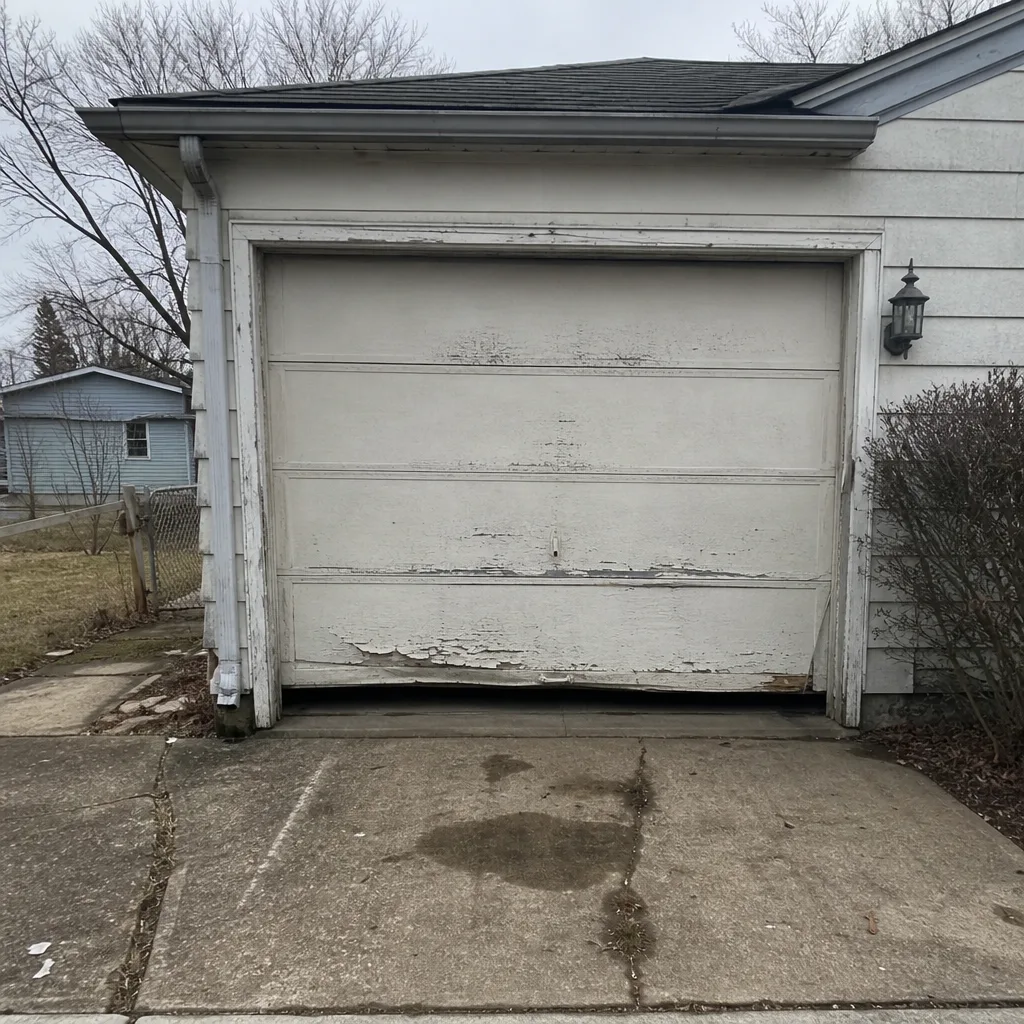 Before
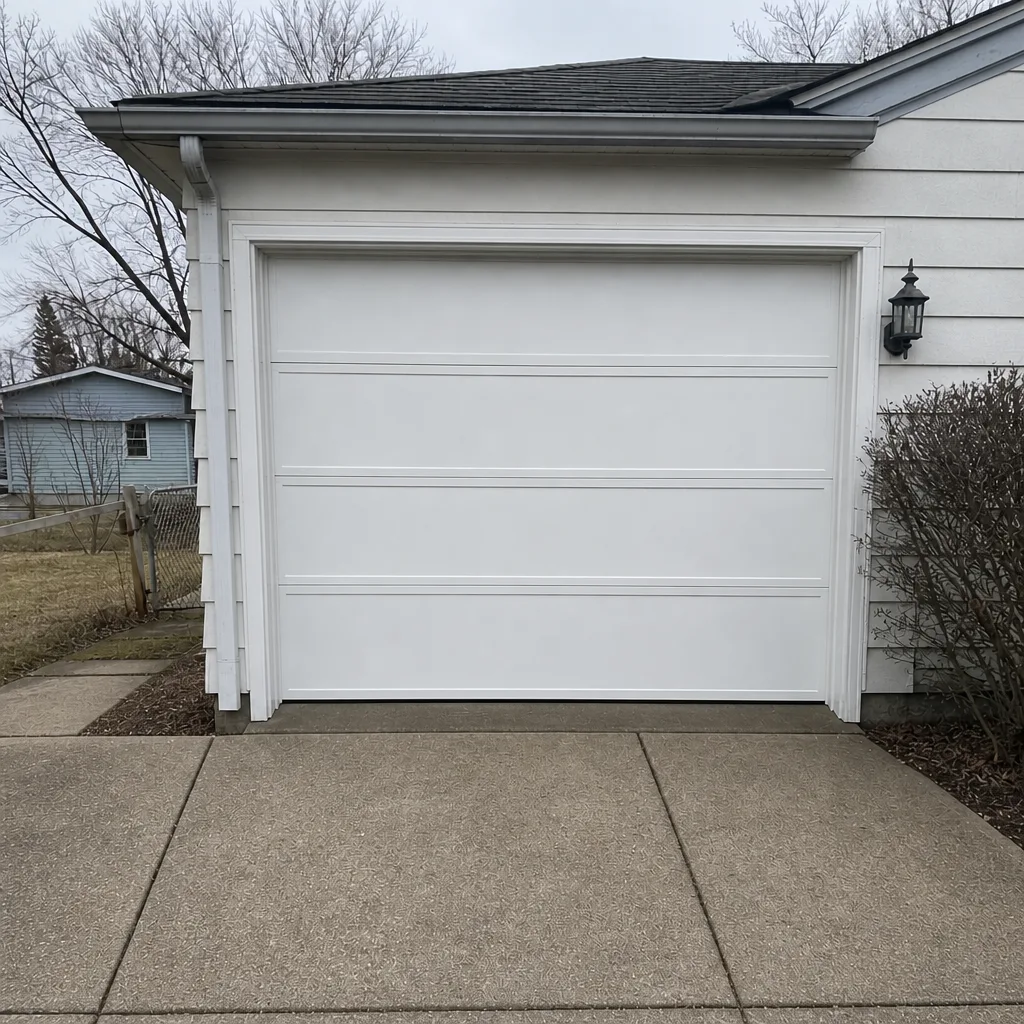 After
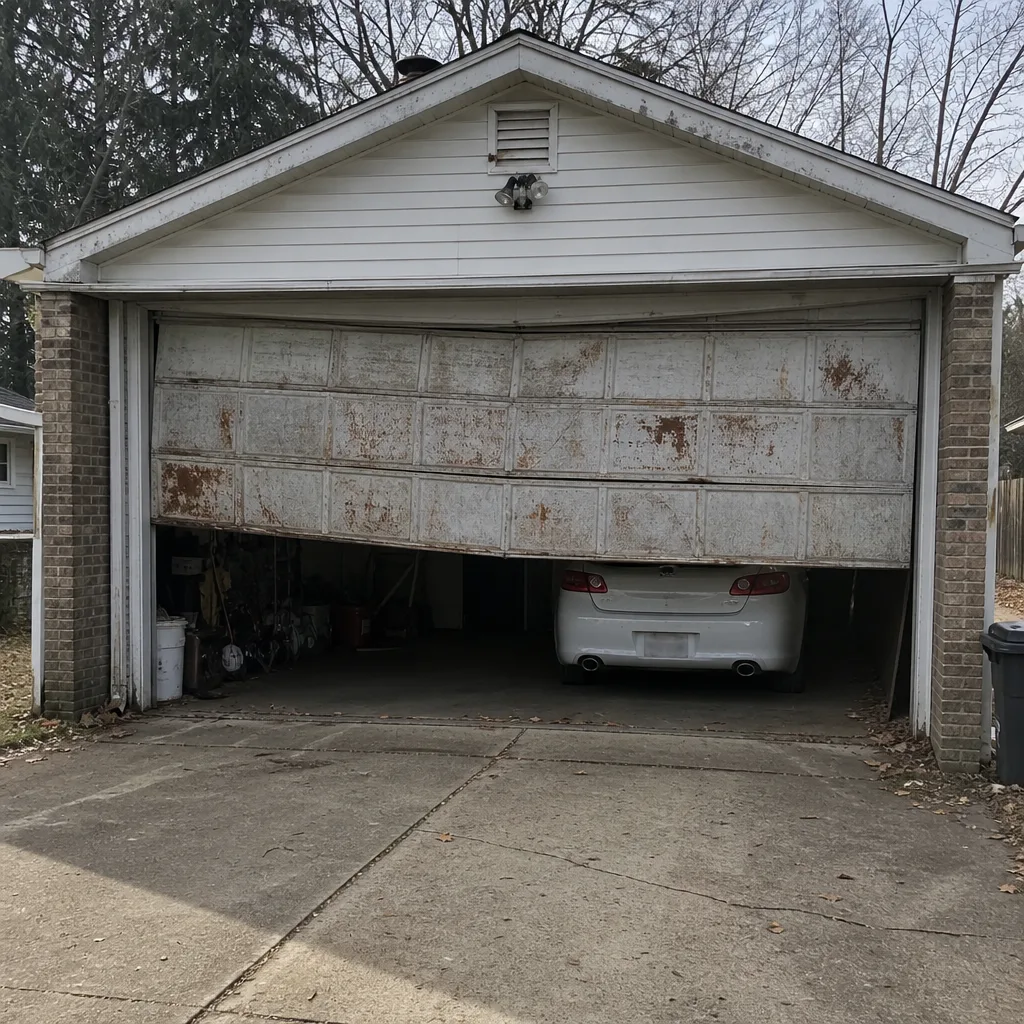 Before
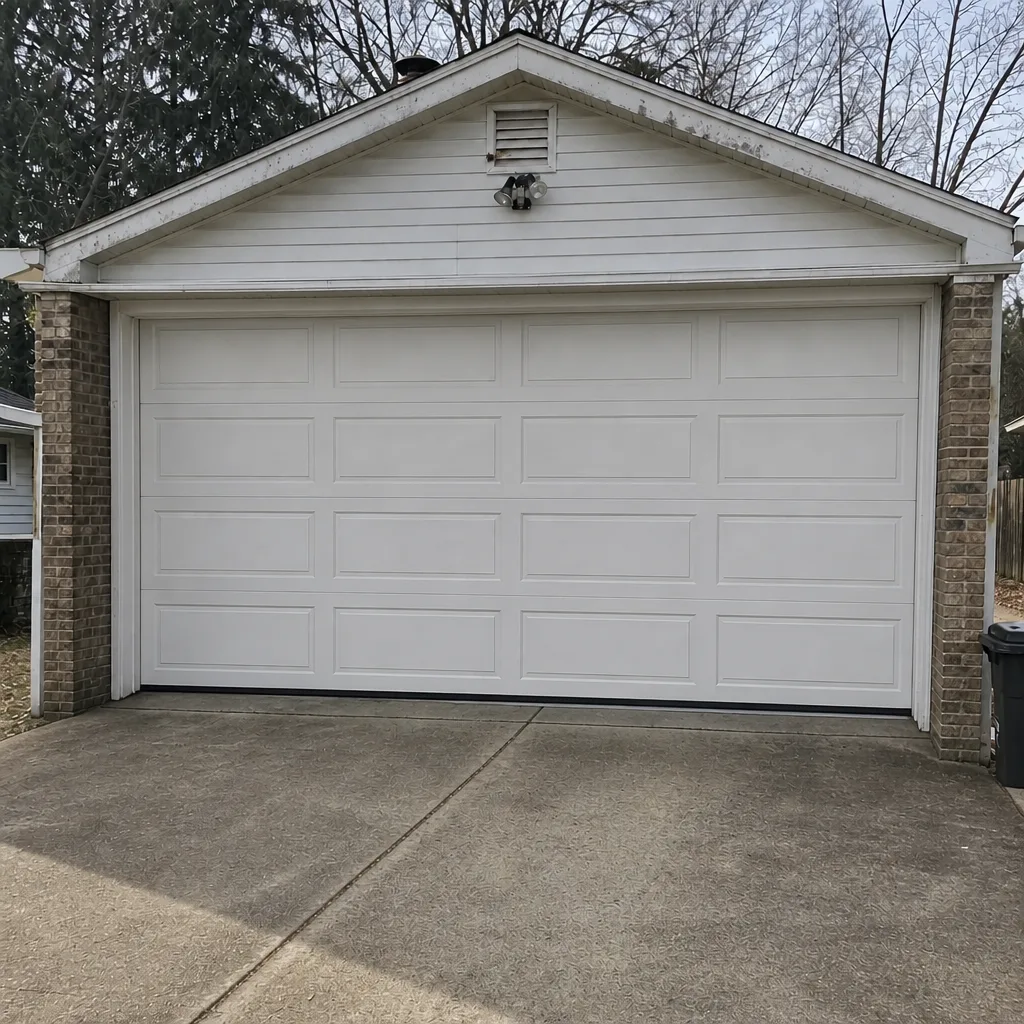 After
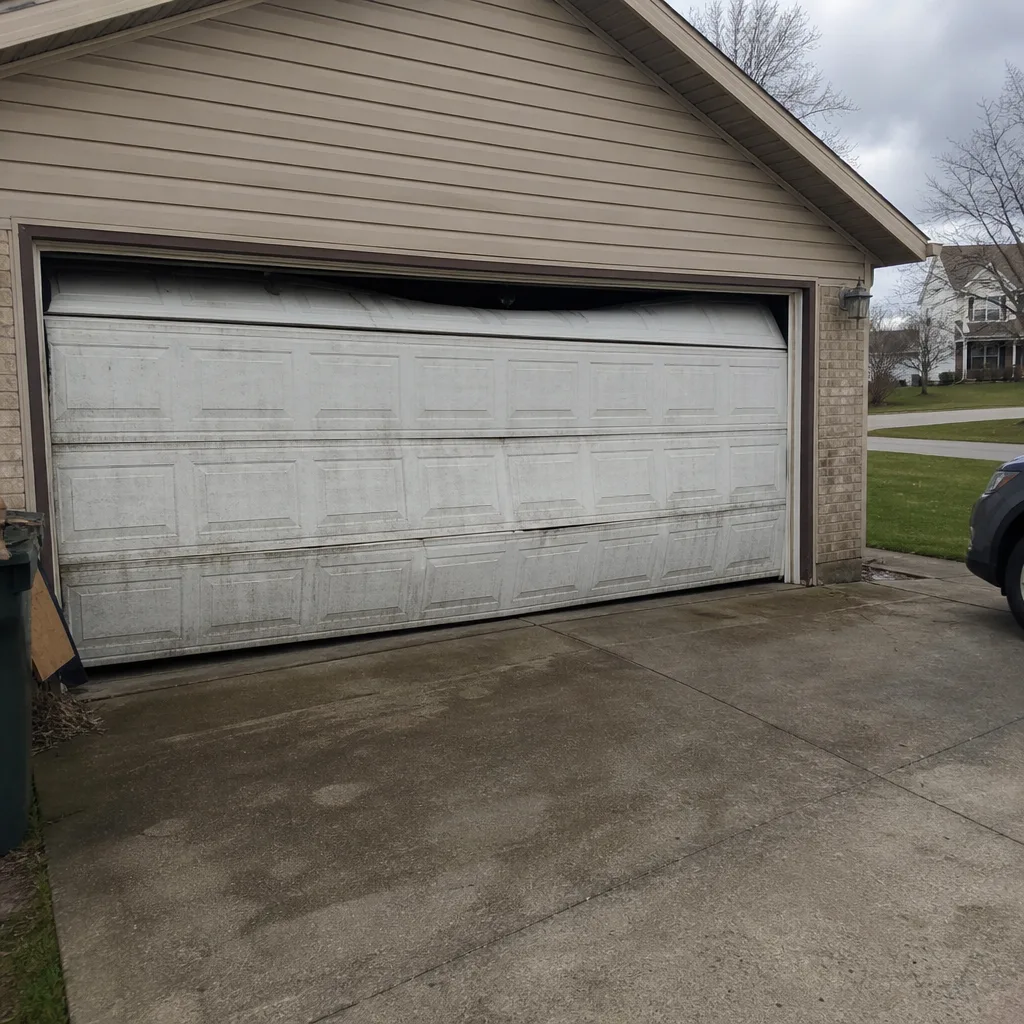 Before
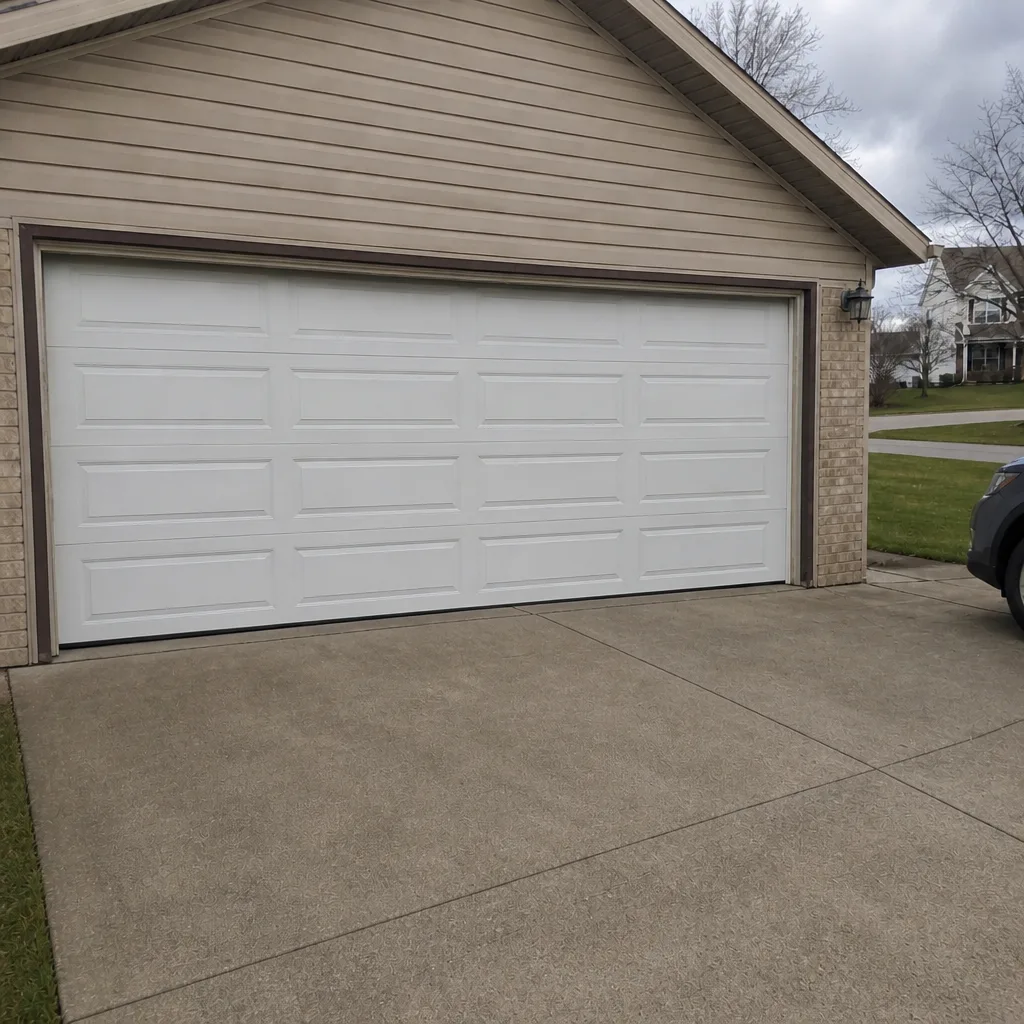 After
When to Call a Professional
Call a professional when any of the following is true: the door won’t open or close; a spring is visibly broken or you heard a loud snap; a cable is kinked, slack, or off its drum; the door reverses unpredictably or leaves the house open; the door is off its track or a panel is hanging after an impact; or the door is noticeably heavier to lift by hand than it was. Any of those is beyond a homeowner check. For less urgent signals – a new squeal, a rusting spring, a weaker remote, a door that hesitates – a scheduled repair is the better move, because it catches the problem while it’s still small. Our technicians have up to 14 years of experience diagnosing exactly these distinctions. Garage Door Repair Canton Pros offers free estimates in Canton – call (855) 707-3791 to get a written price before any work starts.
Frequently Asked Questions
The first sign of a failing torsion spring is usually a door that hesitates for a second or two before it starts moving, often with a grinding or popping sound. A spring that has lost tension makes the door work harder to get moving, which shows up as that pause. If you hear a sharp pop at the start of travel, stop using the door and call a professional – a spring that snaps can be dangerous. Call (855) 707-3791 for an exact quote – estimates are free.
A garage door rarely breaks without warning – almost every failure follows days or weeks of quieter signals that were easy to overlook. A two-second hesitation, gradual noise increase, or speckled rust on a spring usually precedes a breakdown. Catching those signals early is how you avoid the sudden failure on a cold January morning. If you’ve noticed any of them, call (855) 707-3791 for an exact quote – estimates are free.
A garage door is louder in winter because cold temperatures thicken lubricant and make metal parts stiffer, especially in Canton’s cold months. Springs get more brittle and hinges tighten. If the noise is new and sharp – like a pop or creak rather than a low groan – that points to a specific failing component and should be checked before it breaks. Call (855) 707-3791 to schedule a look – estimates are free.
Yes – a door that reverses unpredictably is a safety issue, not just an annoyance. It can mean a misaligned safety sensor, worn sensor wiring, or a travel-limit problem, and in the first case it may leave the house open to the weather and to the street. Don’t leave it – get it diagnosed. Call (855) 707-3791 for an exact quote – estimates are free.
Remote range loss can come from a weak battery, but when a new battery doesn’t restore it, the cause is usually in the opener’s receiver logic or the safety sensors. On older LiftMaster or Chamberlain units this is a common failure point, and a generalist won’t necessarily have the right parts to fix it. Our technicians carry brand-matched parts so you don’t need a second call. Call (855) 707-3791 for an exact quote – estimates are free.
No – a broken or weakened torsion spring should never be repaired yourself. The spring is under extreme tension even when the door is down, and working on it without proper tools and experience can cause serious injury. A professional with the right tools handles it safely and correctly. Call (855) 707-3791 for an exact quote – estimates are free.
The Bottom Line
The garage door is one of the few things in a Canton home that fails predictably – it warns you first. The warning signs are specific: a hesitation on the first inch of travel, a grinding or popping spring, a frayed cable or rusting coil, a door that varies in travel or reverses unpredictably, and a remote that gets weaker over time. Learn to recognize them and you shift from reacting to a breakdown to scheduling a repair while it’s still small. The seasonal pattern matters here too – check springs ahead of January and cables after the April thaw. If you’re unsure what you’re hearing or seeing, our free estimate is the answer. Call (855) 707-3791. We answer 24/7. Fast dispatch from 7am to 7pm, Sunday through Friday.
Written by the team at Garage Door Repair Canton Pros.